Key Takeaways
- Check the forecast and ask about the course's storm signals before starting.
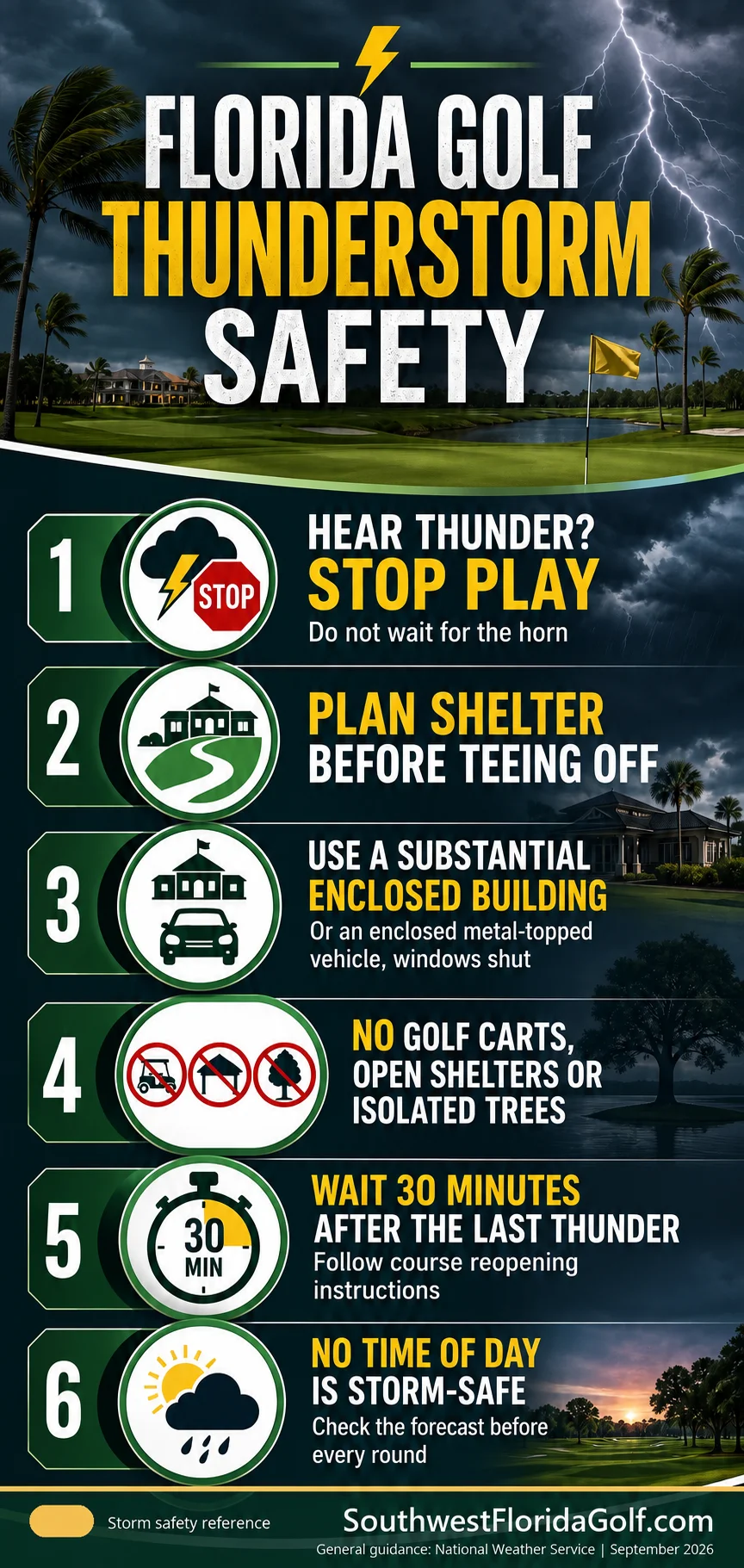
- If you hear thunder, stop playing immediately; don't wait to finish the hole.
- Seek a substantial building or enclosed hard-topped vehicle. Open shelters and golf carts are not safe lightning shelter.
- Wait at least 30 minutes after the last thunder and follow course reopening instructions. See NWS guidance.
Afternoon thunderstorms and golf in Florida go together whether you want them to or not. If you plan to play during the summer months, you are going to encounter this.
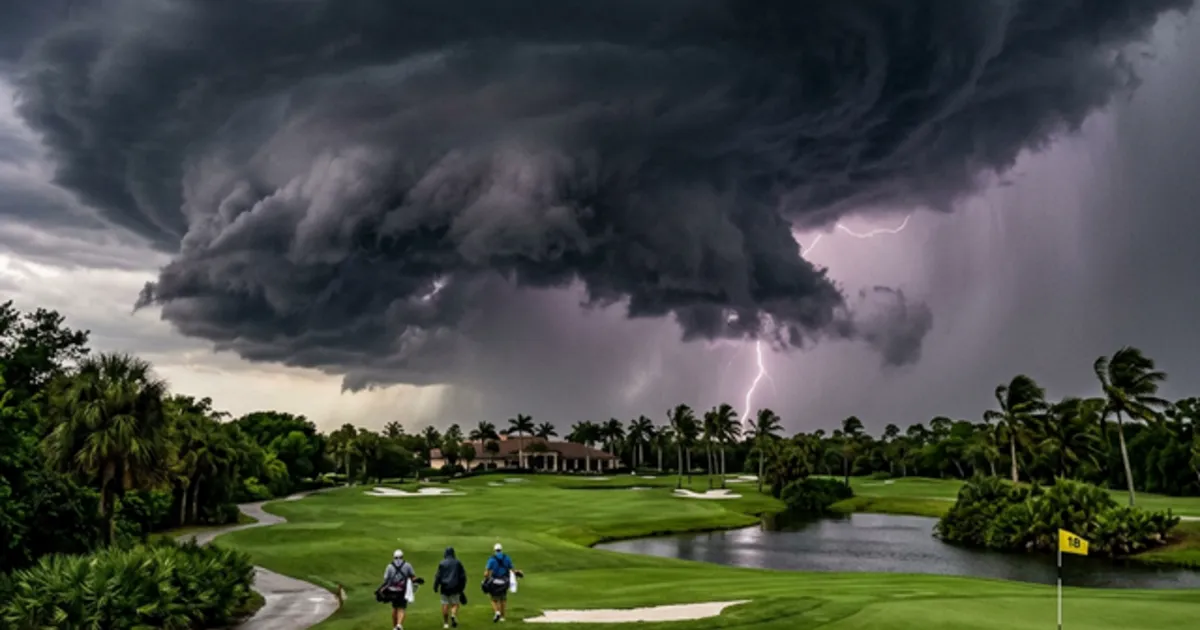
The question is whether you handle it well or end up as someone's cautionary story at the 19th hole. Southwest Florida sits in one of the most lightning-active corridors in the United States, and the storm patterns here are consistent enough that once you understand them, you can work around them with some confidence.
This is not a piece about whether to be scared of Florida weather. It is about being smart. Plenty of golfers log rounds here all summer long and never get caught in a dangerous situation. They just know what to watch for.
Why Florida Gets Hit So Hard (and So Predictably)
The setup for Florida's afternoon storms is almost textbook meteorology. The peninsula is surrounded on three sides by warm water, the Gulf of Mexico to the west and the Atlantic to the east.
During summer, the land heats up rapidly after sunrise, and by late morning, moisture-laden air from both coasts begins converging inland. When that warm, humid air rises fast enough, it builds into the towering cumulonimbus formations that produce lightning and heavy rain.
What makes this especially consistent is the sea breeze collision. Gulf breezes push east, Atlantic breezes push west, and they often meet somewhere over the interior of the state.
Southwest Florida catches this frequently. The National Weather Service tracks Florida as the lightning capital of North America year after year, and Collier and Lee counties are not sitting that out.
Summer thunderstorms often develop in the afternoon, but lightning is not confined to a fixed two-hour window. Use the day's forecast and local alerts, and respond to thunder at any hour.
They can and do. But if you are planning your tee time around minimizing exposure, that two-to-four window is the one to avoid.
Seasonal Patterns: June Through September
The rainy season in Southwest Florida runs roughly from June 1 through the end of September, though May can produce isolated afternoon storms and October sees occasional holdovers. Here is how the months generally break down for golfers:
June starts the season with storms that can be dramatic but are often shorter in duration. The dry season's residual low humidity makes some June mornings surprisingly pleasant. Activity ramps up as the month progresses.
An early start can reduce exposure to the usual afternoon storm period, but storms can occur at other times. Check the forecast and the actual tee sheet; a 7 a.m. reservation does not guarantee a completed or storm-free round.
"I had to check my receipt again because I couldn't believe I was playing such a fine course for the amount I paid. The layout was challenging, the fairways were excellent and the pace of play was comfortable."
jetsamjosi, GolfPass review
September is the peak of hurricane season, which adds a layer of planning around tropical systems, but day-to-day afternoon storm behavior is similar to July and August. The season starts winding down late in the month, with mornings occasionally feeling cooler and drier.
If you want a broader picture of what makes summer golf here worth pursuing around the weather, the off-season advantage guide covers the rate drops and reduced crowds that come with playing during the rainy season. The tradeoff is real and the math usually favors the summer golfer who knows how to work around the weather.
Reading the Sky: What to Watch For
You do not need a meteorology degree to read developing storm conditions on a golf course. There are a handful of reliable visual signals worth knowing.
The most important thing to watch is vertical cloud growth. Cumulus clouds, the puffy, white, fair-weather ones, are harmless when they stay flat and low.
When you see them building upward, particularly when the tops start to take on a cauliflower or anvil shape, that is a cumulonimbus forming. The anvil shape (a flat top spreading outward) is the signature of a mature thunderstorm that has reached the upper atmosphere.
Pay attention to how fast they are growing. A cloud that goes from a small puff to a towering column in 20 or 30 minutes is producing a lot of energy. On a hot July afternoon, this can happen faster than most golfers expect.
Other signs worth noticing:
- A sudden drop in temperature and shift in wind direction often precedes a storm by 15 to 30 minutes.
- A greenish or yellowish tint to the sky can indicate a particularly intense cell.
- If you hear distant thunder, lightning is already within striking range. The old "30-30 rule", 30 seconds between flash and thunder equals 6 miles, is a starting point, but NOAA's lightning safety guidance is clear: if you can hear thunder at all, you are close enough to be at risk.
Horn Signals and Course Protocols
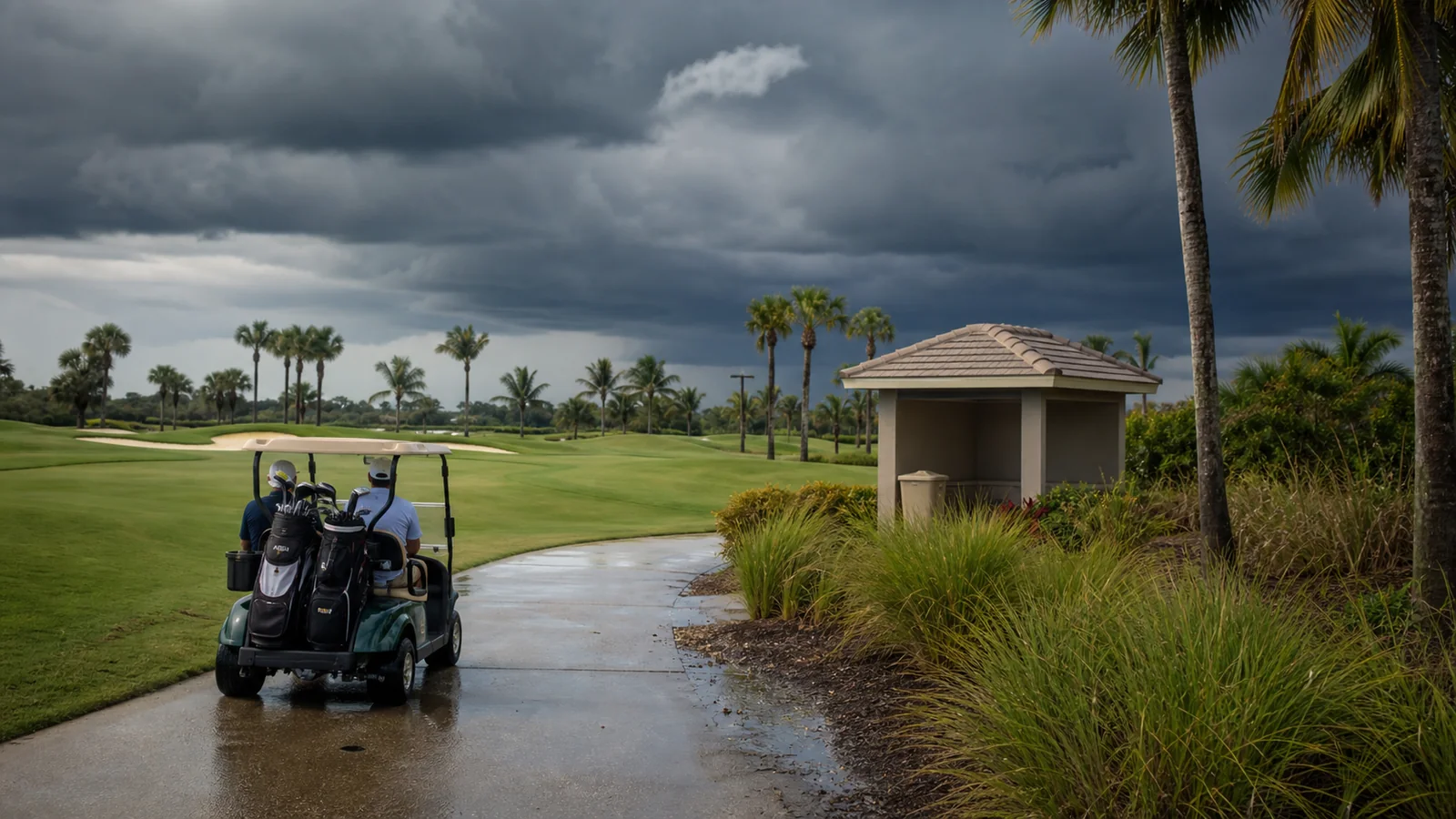
Ask the starter to explain the course's suspension and reopening signals. Do not assume every Southwest Florida course uses the same horn code.
A suspension signal means follow the course's emergency instructions and reach safe shelter promptly. If you hear thunder first, stop playing without waiting for a horn.
Return only after the required waiting period and the course's reopening instructions.
Identify the clubhouse or another substantial enclosed building and an enclosed hard-topped vehicle before starting. Ask the starter how to reach them from the course.
One thing that trips people up: the horn sounds while they are on a hole they have been playing for three hours and do not want to abandon. Finish the hole anyway, right?
No. When the one-blast sounds, you leave.
Tournament rules allow players to mark their balls and lift them, but the spirit of the protocol is get to safety first, resume play later.
Many courses will not charge you for the holes you did not complete if a lightning suspension cuts your round short. Some issue rain checks. Ask when you check in rather than after the fact.
If You Get Caught Out There
Even golfers who follow the rules sometimes get caught between holes when a storm develops faster than expected. If that happens, your priorities are simple: get away from open ground, stay away from metal, and avoid tall isolated objects.
Where to go:
- A substantial enclosed building with electrical wiring or plumbing, such as the clubhouse. Not every small course structure qualifies.
- An enclosed metal-topped vehicle with its windows closed. An open golf cart is not lightning shelter.
Where not to go:
- Under isolated trees. A single tall tree on a flat fairway is a lightning magnet.
- Near water hazards or ponds. Water conducts electricity, and the open ground around it gives you no protection.
- Open-sided pavilions and cart shelters. They are not safe lightning shelter.
- Tree groves. Being among shorter trees does not make an outdoor location safe from lightning.
There is no safe outdoor position during lightning. Keep moving toward a safe building or enclosed hard-topped vehicle; do not stop to crouch as a substitute for shelter.
See National Weather Service outdoor lightning guidance before the round and make a shelter plan with the group.
Once you reach shelter, wait 30 minutes from the last audible thunder before returning to the course. Not 30 minutes from when the rain stopped, 30 minutes from the last thunder.
Radar Apps Worth Having on Your Phone
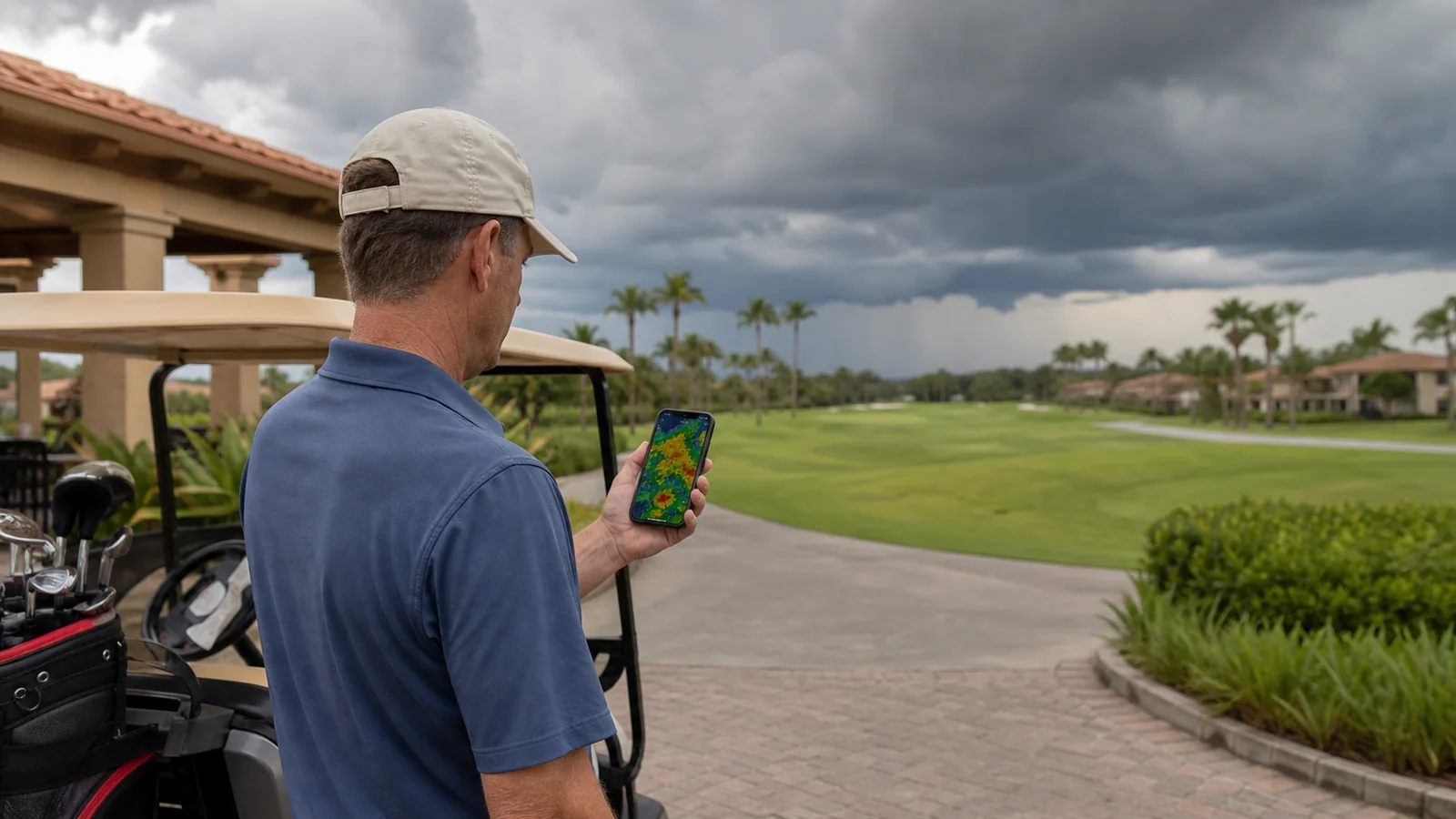
Radar and alerts help you plan, but they do not guarantee advance warning or time to finish a hole. Stop immediately when thunder is heard.
A few that work well for this:
MyRadar, Fast, clean, and the animated radar loop is easy to read on a phone screen in bright sunlight. The storm track feature shows you where a cell is heading and how fast.
Weather Underground, Pulls in data from personal weather stations, which means you sometimes get hyperlocal readings more accurate than NWS stations. Good for seeing what is happening at the specific zip code of the course you are on.
The NWS app (Weather.gov), Less polished than the commercial options but the data is direct from the source. Alerts and warnings show up here first.
The habit to build: check radar at the turn. You are already stopping for a few minutes between nines.
Check the full radar view and local alerts. Storms can develop nearby or approach from different directions, so do not assume a cell to the west gives you another 30 minutes.
That changes how you approach the back nine.
Heat management and hydration matter too, staying ahead of the heat keeps your judgment sharper, which directly affects how well you read and respond to changing conditions. A dehydrated golfer at the 15th hole is not making great decisions about when to seek shelter.
Building a Practical Summer Tee Time Strategy
An early round may avoid part of the typical afternoon storm period. It does not guarantee safety or completion; check the forecast and stop for thunder at any hour.
Confirm the course's opening time and choose a round length that suits the forecast and your heat tolerance.
After 5 p.m. is not an all-clear. Evening play still requires a current weather check, safe shelter access and enough daylight.
Midday tee times, 11 AM to 2 PM, are the ones to avoid if thunderstorm avoidance is your priority. You will almost certainly play through the peak window, and the combination of heat and storm risk makes for a stressful back nine.
Build a weather check into your pre-round routine the night before and again the morning of. If a complex of storms is already lined up to the west by 6 AM, that is useful information. It does not necessarily mean you cancel, it means you go in with your eyes open and your radar app ready.
Frequently Asked Questions
What time do thunderstorms usually hit in Southwest Florida during summer?
Afternoon storms are a common summer planning concern, but they can develop at other times. No tee time is a lightning all-clear; check the forecast and stop immediately for thunder.
How much warning do you typically get before a storm hits a golf course?
Alerts and visible cloud growth can provide warning, but not a reliable 20-to-30-minute buffer. Have a shelter plan before play and stop as soon as thunder is heard.
Lightning detection systems used by many courses trigger horn warnings when lightning is detected within a set radius, usually 8 to 10 miles.
Is it safe to stay in a golf cart during a thunderstorm?
No. A golf cart offers no meaningful protection from lightning. It is not enclosed like a hard-top vehicle, and the metal frame can conduct electricity. When a storm is approaching, use the cart to get to shelter quickly, then leave it and get inside a building or hard-top vehicle.
How long do you have to wait after lightning before returning to the course?
Wait at least 30 minutes after the last thunder, restarting the clock if thunder returns, and follow the course's reopening instructions. Horn codes vary.
Does Florida golf slow down completely during summer?
Not at all, it shifts. Locals and seasoned visitors adjust their tee times to early morning and use the summer rate drops to play courses that are packed and expensive in peak season.
Crowds are thinner, rates are lower, and the courses are in good condition after regular summer rain. It requires more planning around weather, but many golfers prefer summer for exactly those reasons.
What is the safest place on a golf course when lightning strikes?
Use a substantial enclosed building, such as the clubhouse, or an enclosed hard-topped vehicle with windows shut. Do not assume a structure called a course shelter is lightning-safe.
Golf carts, open pavilions and isolated trees are not safe shelter. Move toward a suitable building or vehicle rather than staying outside to protect equipment.
auto_stories Recommended Reading