Key Takeaways
- Choose cooler playing hours, but check the forecast and your health risks. An early start does not guarantee safety.
- Carry water, drink regularly and plan refills. Get individual advice if you have fluid restrictions or relevant health conditions.
- Use sun-protective clothing and broad-spectrum, water-resistant sunscreen, following the label's reapplication directions.
- Stop at the first thunder. Seek a substantial enclosed building or enclosed hard-topped vehicle, not an open cart shelter.
Southwest Florida summers are not for the faint-hearted. From June through September, temperatures climb into the low-to-mid 90s before noon, humidity sits around 80 percent, and the afternoon sky turns into a daily lightning show.
None of that means you have to put the clubs away. Plenty of locals play year-round, they just play smarter.
Here is what they know that visiting golfers and newcomers often find out the hard way.
Why Summer Golf in Florida Is a Different Game
The heat index, the combination of air temperature and humidity, is the real number to watch, not the thermometer. When the air temperature is 92°F and humidity is 80 percent, the heat index can read 110°F or higher.
At that level, the National Weather Service classifies conditions as "danger" territory, meaning heat cramps and heat exhaustion are likely with prolonged outdoor exposure. Walking 18 holes in those conditions without a solid plan is not adventurous, it is reckless.
Summer quotes may be lower, but check each course's dates and walking policy. Reduced demand does not automatically remove cart restrictions.
We covered the broader upside in our post on summer golf in Southwest Florida and the off-season advantage. This post is specifically about keeping yourself safe and comfortable while you take advantage of it.

Tee Times: The Earlier, the Better
If you take one thing from this entire post, make it this: tee off before 8 a.m. The window between 6:30 and 7:30 a.m. is where experienced Florida summer golfers live.
Temperatures are in the low-to-mid 80s, the breeze off the Gulf has not died yet, and you can finish 18 holes before the heat index hits its dangerous peak.
After 10 a.m., every half-hour on the course gets harder. By noon, you are fighting 95-plus-degree heat, full sun exposure, no relief, and a body that is already tired from the first nine.
Courses like Fort Myers Country Club and Eastwood Golf Course typically open their first tee times around 7 a.m. in summer, grab one of those slots and protect it.
"I had to check my receipt again because I couldn't believe I was playing such a fine course for the amount I paid. The layout was challenging, the fairways were excellent and the pace of play was comfortable."
jetsamjosi, GolfPass review
If an early tee time is not available, consider playing nine holes instead of 18. There is no shame in a well-played front nine followed by breakfast in the air conditioning.
Hydration Is a Strategy, Not an Afterthought
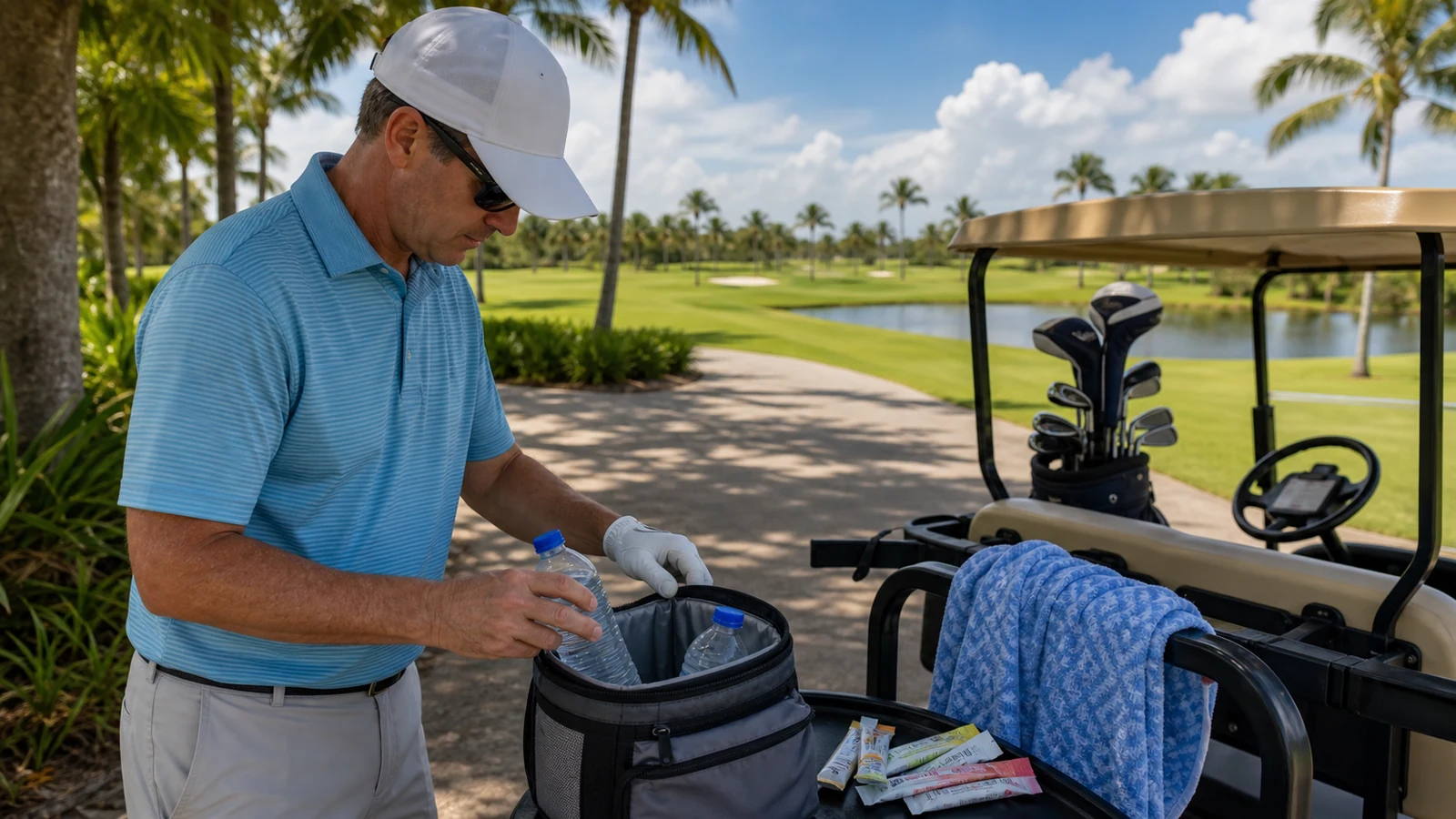
Most golfers underestimate how much fluid they lose during a summer round. You can sweat off more than a liter of fluid per hour in high heat and humidity.
Do not wait until you feel unwell to take a water or cooling break. Use the CDC heat-health guidance to plan around the forecast and personal risk factors.
The practical approach:
- Bring drinking water and identify refill points before starting.
- Drink regularly. Fluid needs vary; do not force a fixed hourly volume intended to fit every golfer.
- Do not wait for the beverage cart. Bring your own cooler bag with ice.
- Ask a clinician about fluids and electrolytes if you have kidney or heart disease, fluid restrictions or relevant medicines. Hole nine is not a universal trigger for supplements.
- Avoid alcohol while playing in the heat.
Clothing and Gear for the Heat
Choose light, breathable clothing that suits the conditions and provides sun protection.
Choose a fit that allows airflow and movement. Carry a spare shirt or glove if wet clothing makes the round uncomfortable, and take cooling breaks instead of relying on fabric alone.
What to wear:
- Moisture-wicking shirt with UPF 30 or higher sun protection built in
- Light-colored shorts or pants, dark colors absorb significantly more heat
- A wide-brim hat (at least 3 inches) rather than a standard golf cap, your neck and ears take a beating
- UV-blocking sunglasses rated for 100% UVA/UVB
Footwear matters too. Breathable mesh golf shoes keep your feet cooler than traditional leather. Bring an extra pair of socks, wet socks after 18 holes in the heat are a blister waiting to happen.
One piece of gear most golfers skip: a cooling towel. Soak it, wring it, drape it on the back of your neck between shots. It is a small thing that makes a real difference by the back nine.
Sun Protection That Actually Works
A four-hour round in Florida summer sun is serious UV exposure. The Skin Cancer Foundation recommends SPF 30 or higher for extended outdoor activity, for a full summer round in Florida, SPF 50+ is the smarter starting point.
Apply it 15 minutes before you leave the car, not on the first tee.
The American Academy of Dermatology recommends broad-spectrum, water-resistant SPF 30 or higher. Reapply at least every two hours outdoors and after swimming or sweating, following the product label. Water resistance is labeled for 40 or 80 minutes, not universal all-day protection.
Do not wait for the turn if the label calls for earlier reapplication.
Do not skip your ears, the back of your neck, and the tops of your feet if you are wearing low-cut shoes. These are the spots that get burned most often and hurt the most afterward.

Reading Florida Weather Patterns
Florida summer weather follows a pattern that, once you understand it, becomes predictable enough to plan around. Most days from June through September follow the same basic script: clear and warm in the morning, building cumulus clouds by late morning, afternoon thunderstorms developing between noon and 4 p.m., and clearing again by early evening.
The National Weather Service's local forecast page and radar are your best tools. Check the forecast the night before and again the morning of your round.
Look specifically for the probability of afternoon thunderstorms and when they are expected to develop. If the forecast shows storms arriving before 1 p.m., an early morning 9-hole loop may be your best option.
Watch the weather around you, not only the western sky. Nearby storm development may not leave much warning time.
A flat-bottomed cumulus cloud that is growing vertically, called a cumulonimbus, is a storm in development. When you see anvil-shaped clouds forming on the horizon, you have maybe 30, 45 minutes before lightning becomes a real risk.
That is enough warning if you act on it immediately, not when you finish the hole you are playing.
Lightning Safety: Take It Seriously
Florida leads the United States in lightning deaths and injuries, not a statistic to dismiss. A golf course is one of the most dangerous places to be in a lightning storm: open terrain, elevated metal clubs, lone trees that draw strikes.
Most courses sound an air horn or siren when lightning is within a certain radius. Do not wait for the horn.
The rule most PGA Tour caddies use: if you can hear thunder, you are close enough to be struck. Lightning can travel several miles from a storm cell that is not directly overhead.
Stop immediately for thunder and move to a substantial enclosed building or enclosed metal-topped vehicle with windows shut. Open-sided course shelters and golf carts are not safe lightning shelter.
What to avoid:
- Standing under a lone tree or near a tree line
- Holding or standing near metal clubs
- Staying in or near an open-sided cart shelter
- Waiting on an elevated area like a tee box or hill
- Lingering near a pond or water hazard
There is no safe outdoor position during lightning; crouching is not a substitute for shelter. Keep moving toward a suitable building or vehicle. Wait at least 30 minutes after the last thunder and follow the course's reopening instructions. See NWS guidance.
When to Call It a Round
This is the topic most golf content skips, because it feels like quitting. It is not. Knowing when to stop is the decision that separates experienced Florida summer golfers from the ones who end up in trouble.
Watch for these warning signs in yourself and your playing partners:
- Confusion, slurred speech, collapse or seizures: call 911 immediately.
- Headache that is getting worse rather than better
- Nausea or vomiting
- Very hot skin with altered behavior, whether dry or sweaty, can signal an emergency.
For suspected heat stroke, call 911 and begin rapid cooling while help arrives. Stay with the person. Heat stroke can involve heavy sweating; dry skin is not required. For headache, nausea, dizziness or weakness, stop play, cool down and seek medical help. See the CDC heat-illness guidance.
Do not resume the round just because a cart is available. Get help and cooling first; a cart ride does not treat heat illness.
A shortened round is preferable to pushing through symptoms. Let recovery and medical advice guide your next outing, not a promise to return the following morning.
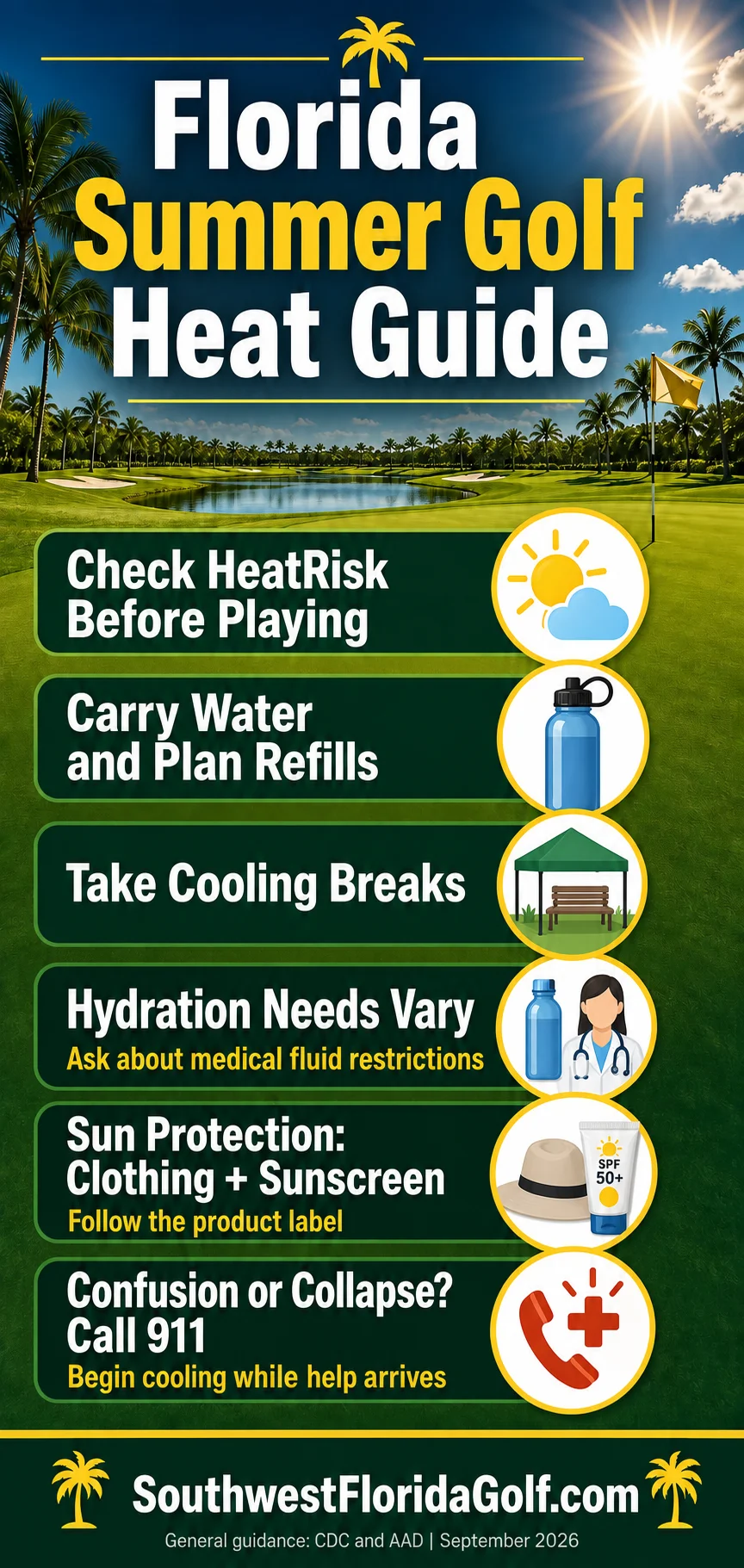


A Realistic Summer Round Checklist
Before you leave the house:
- Check the NWS forecast for afternoon storm timing
- Apply SPF 50+ sunscreen, face, ears, neck, arms
- Pack drinking water and a snack, and plan reliable refill and cooling stops.
- Wear moisture-wicking, light-colored, UPF-rated clothing
During the round:
- Drink before you feel thirsty
- Reapply sunscreen at the turn
- Watch the western sky from hole 14 onward
- Check in with your playing partners, heat affects judgment quietly
- Locate a substantial enclosed building or enclosed hard-topped vehicle before starting.
Frequently Asked Questions
What is the best time of day to golf in Florida in the summer?
Before 8 a.m. is the target. Tee times between 6:30 and 7:30 a.m. give you the coolest temperatures and the best chance of finishing 18 holes before afternoon storms develop. If morning times are unavailable, consider playing just nine holes to reduce your exposure.
How much water should I drink during a summer golf round in Florida?
Carry water, drink regularly and arrange refills. Needs vary with heat, activity and health; ask a clinician about fluid or electrolyte limits when relevant rather than following one fixed volume for every round.
Is it safe to golf in Florida in July and August?
Summer golf carries heat and storm risks even with preparation. Check the forecast, consider a shorter round or postponement, and stop for symptoms or thunder. Individual medical advice matters for people at higher risk.
How do I know when a Florida thunderstorm is approaching on the golf course?
Watch for vertically growing cumulus clouds, especially anvil-shaped formations, on the western horizon. If you can hear thunder, lightning is close enough to be dangerous.
Most courses sound an alert, but do not rely on that, move to shelter when you see storm development, not when you hear the horn.
What sunscreen SPF should I use for golf in Florida?
Use broad-spectrum, water-resistant SPF 30 or higher on exposed skin, with sun-protective clothing. Follow the label and reapply at least every two hours outdoors and after sweating or swimming; some water-resistant products need earlier reapplication.
What are the signs of heat stroke on the golf course?
Confusion, slurred speech, collapse, seizures or very high body temperature can signal heat stroke. The person may be sweaty or have dry skin. Call 911, stay with them and begin rapid cooling while emergency help arrives.