Summer in Southwest Florida has a reputation. The snowbirds have gone home, the heat index climbs past 100, and afternoon thunderstorms roll in like clockwork.
Most people assume the golf scene goes quiet from May through October. That assumption is costing them money, and some of the best tee times they'll ever play.

Key Takeaways
- Compare dated summer and winter quotes. There is no region-wide guaranteed discount.
- A lighter tee sheet can help pace, but replays and extra holes still require the operator's permission.
- Early morning tee times (before 8 AM) make summer golf genuinely comfortable, even in July and August.
- Afternoon storms are predictable and usually short, knowing the pattern lets you plan around them.
- Course conditioning varies widely in summer; some tracks actually play better off-season thanks to reduced traffic.
Why Summer Golf in Southwest Florida Is Underrated
The off-season myth persists because it benefits nobody to correct it. Tour operators, seasonal rentals, and peak-season businesses have little incentive to advertise how good things get when the crowds leave.
But ask any local golfer, the ones who actually live here year-round, and they'll tell you summer is when they do most of their playing.
Southwest Florida sits in a unique geographic position. The Gulf Coast moderates temperatures compared to inland Florida, and the sea breeze off the water kicks in most mornings by 9 or 10 AM.
That's not marketing copy, it's just geography. The same coastal air that makes winter here attractive also makes summer more tolerable than people expect.
The real story isn't about suffering through heat for cheap golf. It's about understanding the actual conditions on the ground versus the reputation. Once you do that, the off-season starts looking less like a consolation prize and more like an opportunity.
The Price Drop Is Real, and It's Significant
Summer can offer lower quotes than winter, but the difference must be checked for the same course and rate category.
Use our dated under-$75 guide for sourced examples rather than assuming a region-wide percentage reduction.
Public and semi-private tracks tend to show the steepest drops. A course like Eastwood Golf Course in Fort Myers or Coral Oaks Golf Course up in Cape Coral become genuinely affordable options that compete with any course in Florida on a value basis during summer.
"I had to check my receipt again because I couldn't believe I was playing such a fine course for the amount I paid. The layout was challenging, the fairways were excellent and the pace of play was comfortable."
jetsamjosi, GolfPass review
Resident prices and visitor prices may differ. Compare like-for-like eligibility before describing a seasonal saving.
Multiply the saving on your actual quote by the rounds you expect to use. Do not budget on an assumed per-round discount.
Some regulars who lock in summer memberships or frequent player programs end up playing some of the nicest tracks in the region for what amounts to pocket change per round.
If you're hunting deals proactively, the end-of-season discount window starting in April is worth watching, courses start dropping rates before summer officially arrives, and early birds catch genuinely good pricing.
Empty Courses Change the Entire Experience
During peak season, tee times at popular courses fill up days or weeks in advance. Five-hour rounds are common on busy weekends. The pace of play drags, and the social pressure to keep moving can turn a relaxing afternoon into a stressful one.
Summer flips that completely. Show up on a Tuesday morning in July at most Southwest Florida courses and you may have the front nine to yourself.
Rounds that take five hours in February routinely finish in three and a half hours or less. You can take your time reading putts, replay a tough hole without a group bearing down on you, and actually enjoy the walking pace of the game.
This matters more than people realize. Golf is a game that rewards practice and repetition, and the ability to drop a second ball and try a shot again, without holding anyone up, is genuinely valuable.
You learn more about your game in a summer round with room to breathe than in three peak-season rounds where you're rushing every shot.
Fort Myers Country Club is one operating public option to compare in summer. Old Corkscrew should not be included in a current summer itinerary.
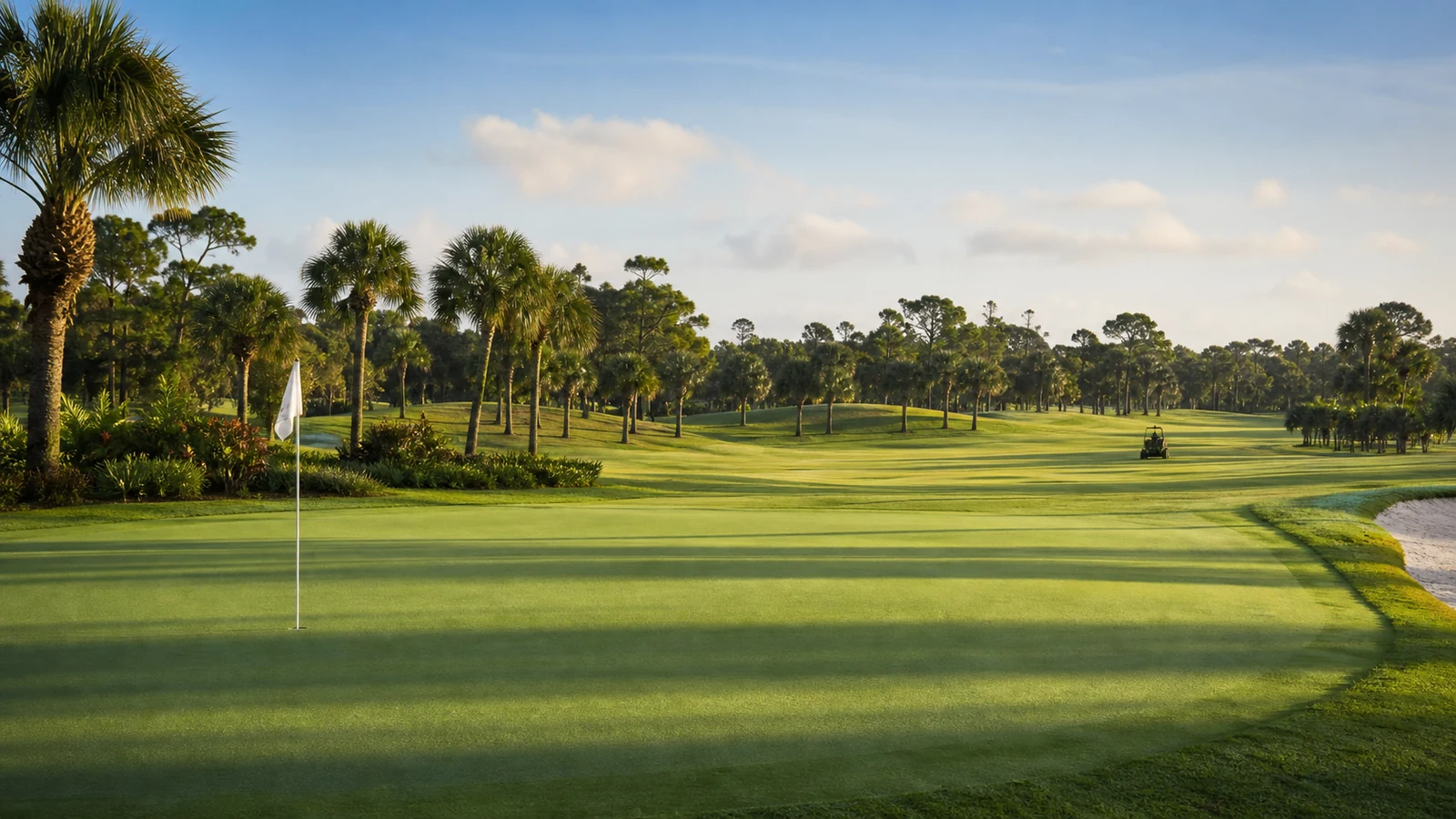
Course Conditioning in Summer: The Real Story
This is where things get nuanced. Summer conditioning in Southwest Florida isn't uniform, it depends heavily on each course's maintenance budget, irrigation infrastructure, and turf management philosophy.
The good news: rainfall in summer is plentiful, and many courses actually look greener and lusher in July than they do in a dry February. Bermuda grass, which dominates most Southwest Florida fairways, thrives in heat and humidity.
With reduced foot traffic and consistent rain, fairways that get beat up during peak season have time to recover.
The less good news: greens can get soft and bumpy from heavy rainfall, and some courses scale back maintenance staff in the off-season. Cart path restrictions after storms can add time and frustration to a round.
It's worth calling ahead or checking recent reviews to get a current read on conditions before you head out.
A few things to look for when evaluating summer conditioning:
- Whether the course uses overseeded ryegrass (which dies out in heat) or relies on Bermuda year-round
- Recent rainfall totals, too little means firm, patchy fairways; too much means cart restrictions
- Staff levels and mowing frequency, which some courses reduce in the off-season
The locals' guide to Fort Myers courses breaks down which tracks hold up best in summer if you want a more targeted look at specific options.
Dealing With Heat and Afternoon Storms
Let's be direct: it is hot. Southwest Florida summers are genuinely demanding, and anyone telling you otherwise is selling something. The question isn't whether it's hot, it's whether the heat is manageable, and for most golfers who come prepared, the answer is yes.
The afternoon storm pattern is one of the most predictable weather phenomena in Florida. Sea breeze fronts collide inland, typically triggering storms between 2 and 5 PM during summer months.
The National Weather Service's Southwest Florida forecast page is worth bookmarking if you're playing regularly, they track these patterns in detail, and their short-range forecasts during summer are generally reliable.
Most experienced summer golfers in Southwest Florida treat afternoon storms as a non-issue because they simply don't play in the afternoon. The entire game shifts to the morning hours, which changes the culture of a round in ways that are mostly positive.
Practical heat management that actually works:
- Hydrate starting the night before, you'll sweat more than you expect, and hydration on the course alone isn't enough.
- Lightweight, moisture-wicking shirts and UV-protective gear make a measurable difference over a full round.
- Electrolyte drinks outperform plain water on the course, sodium and potassium replacement matters in sustained heat.
- Take advantage of shade during cart rides and on tee boxes with tree cover.
- Know the lightning protocol for your course and don't be the person who ignores the horn.
The CDC's heat stress guidelines are worth a quick read if you're not acclimated to working or playing in sustained high temperatures. Heat illness is real, and recognizing early warning signs, cramping, dizziness, stopping sweating, is important.
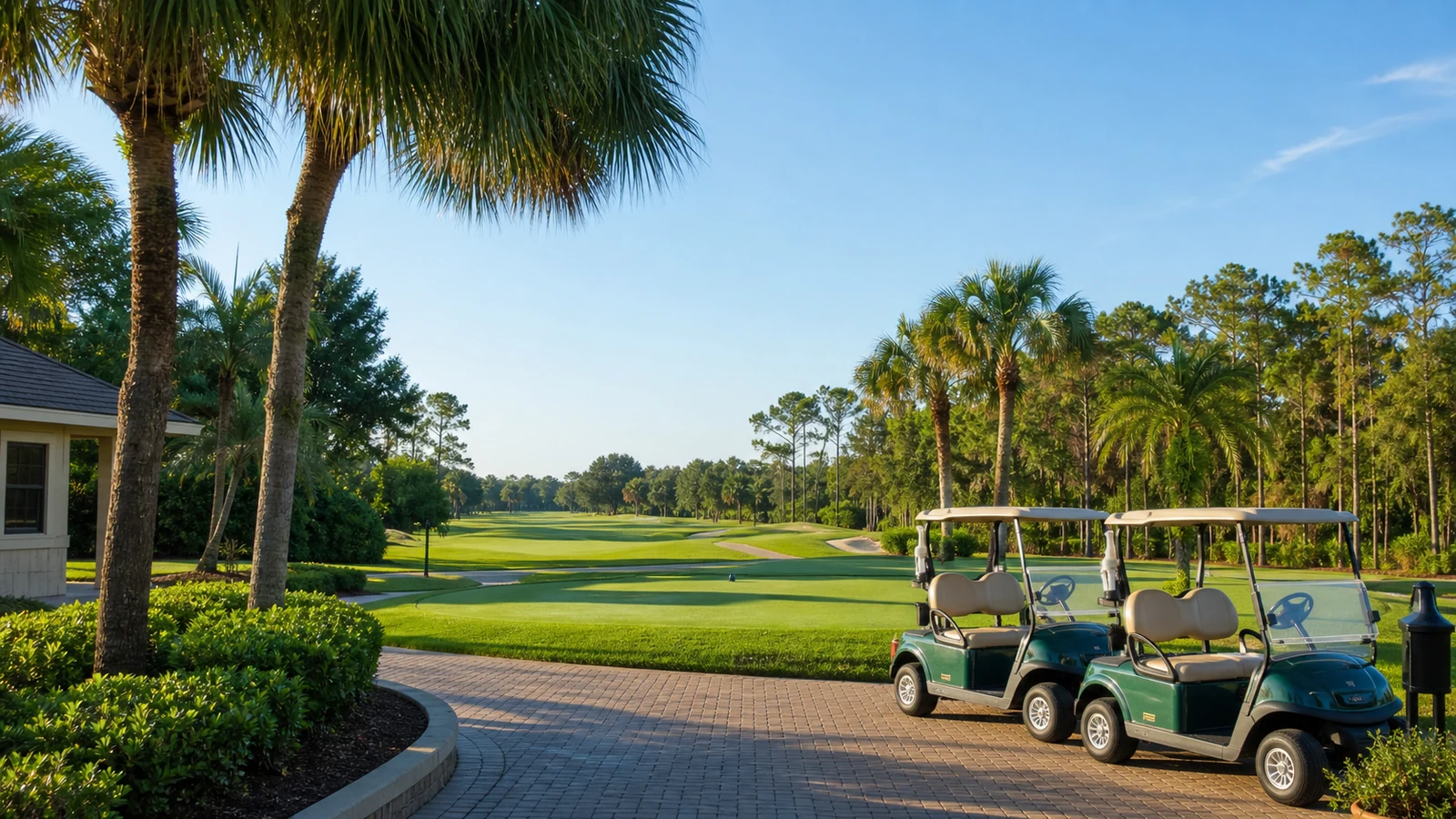
Best Times of Day to Play in Summer
The window for comfortable summer golf in Southwest Florida is real, but it's specific. Here's how the day actually breaks down:
Before 8 AM: The sweet spot. Temperatures are in the low to mid 80s, humidity is already present but manageable, and the sea breeze hasn't fully kicked in yet, meaning you're playing in calm, early-morning conditions. Tee times at 6:30 or 7 AM let you complete 18 holes before the heat of the day arrives. This is when serious local golfers play, and the courses feel like a different world.
8 AM to 10 AM: Still very playable. You'll feel the heat starting to build, but a round started at 8 AM will wrap up by noon at a well-paced course. This window is comfortable for most golfers who come prepared.
10 AM to 2 PM: Challenging. Temperatures are at their peak, and you're working against both the heat and the approaching afternoon storm window. Not impossible, but not ideal. If this is your only option, commit hard to the hydration and shade strategies above.
After 5 PM: A second playable window opens once storms pass. Evening rounds can be genuinely pleasant, temperatures drop, the course empties further, and the light is beautiful. Just watch the radar, because late storms do happen.
The USGA has published practical guidance on playing in summer heat that aligns with what local golfers here have figured out over years of year-round play.
Who Summer Golf Is Right For
Year-round Southwest Florida residents who already know the drill are the obvious candidates. But summer golf here also works well for a few other groups:
- Budget-conscious travelers who want to play quality courses without peak-season prices
- Golfers who prefer fast, uncrowded rounds over pristine but packed courses
- Anyone working on their game who wants the space to practice and repeat shots on a real course
- Retirees and remote workers with flexible morning schedules who can hit the course at 7 AM
The people summer golf doesn't suit: those who can't handle heat at all, golfers who need perfect conditioning above everything else, and anyone who needs a midday start time for logistical reasons. All of those are legitimate reasons to skip the off-season.
But if those don't apply to you, the case for summer play is stronger than the reputation suggests.
Frequently Asked Questions
Is Southwest Florida golf really playable in July and August?
Yes, with the right approach. Early morning tee times, before 8 AM, are comfortable even in peak summer.
The heat becomes genuinely difficult between 11 AM and 3 PM, but most experienced local golfers simply shift their schedule around that window. The courses are open, the greens are rolling, and the prices make it worth the adjustment.
How much cheaper are green fees in summer?
It varies by course, starting time and rate category. Compare dated quotes and the full total; a fixed 40-to-60-percent saving is not established here.
What time do the afternoon storms usually hit?
Most days during summer, convective storms build and hit between 2 and 5 PM. The pattern is reliable enough that it functions almost like a schedule, which makes planning around it straightforward. Check the radar before any round starting after noon.
Are courses in worse shape during the off-season?
It depends on the course. Some tracks actually show better fairway conditions in summer due to ample rainfall and reduced traffic.
Greens can suffer from heat and storm saturation. The gap between well-maintained and poorly maintained courses becomes more visible in summer, so doing a little research before you book is time well spent.
Do I need to book tee times in advance during summer?
Rarely. Walk-on availability at most Southwest Florida courses is common during summer weekdays, and even weekend mornings often have last-minute openings.
That flexibility is one of the underappreciated perks of the off-season, spontaneous golf becomes possible in a way it simply isn't during peak season.