Key Takeaways
- A 36-hole day in Southwest Florida is genuinely doable year-round, the trick is choosing two courses within 20 minutes of each other and teeing off by 7 a.m.
- Late December through April is the sweet spot: courses are in top shape, sunrise comes early enough, and you can finish 36 before sunset with time to spare.
- Budget from two dated playing quotes, plus travel, meals, rentals and any extra cart charges.
- Choose walking or riding around the forecast, your fitness and course rules; do not add exertion when tired or overheated.
- Hydration and early nutrition are the difference between finishing strong and dragging through the back nine of round two.
Thirty-six holes in a single day used to be the standard test of a golfer's commitment. Tour pros did it routinely in the early days of the game.
Somewhere along the way it became a bucket-list item, something people talk about but rarely plan properly. If you're in Southwest Florida, whether you live here or you're visiting during season, this is one of the best places in the country to actually pull it off.
The weather cooperates, the courses are close together, and the sheer number of tracks means you're not stuck playing the same layout twice.
This guide walks you through how to make a 36-hole day work logistically, which course pairings make the most sense, what it's going to cost, and a few things nobody tells you until the back nine of round two.

Why Southwest Florida Works for 36 Holes
The geography here is almost unfairly convenient for multi-round days. The Fort Myers metro, Cape Coral, Bonita Springs, and Naples are all connected by a grid of highways that keep driving times between courses short.
On a good day, you can get from Eastwood Golf Course in Fort Myers to Coral Oaks Golf Course in Cape Coral in about 15 minutes. That matters when you're trying to maximize daylight.
Sunrise in season lands around 7 a.m. and sunset pushes past 7:30 p.m. in late spring. A first tee time at 7 a.m., a pace of play around 4 hours and 15 minutes per round, and a 30-minute transition window puts you starting round two by noon.
You finish 18 holes of afternoon golf with light to spare. That's the basic math, and it holds up.
The Fort Myers area alone has enough public-access courses within a 25-mile radius that you could run this exercise a different way every weekend for months. The challenge isn't finding two courses, it's choosing the right pairing for your game, your budget, and the kind of day you want to have.
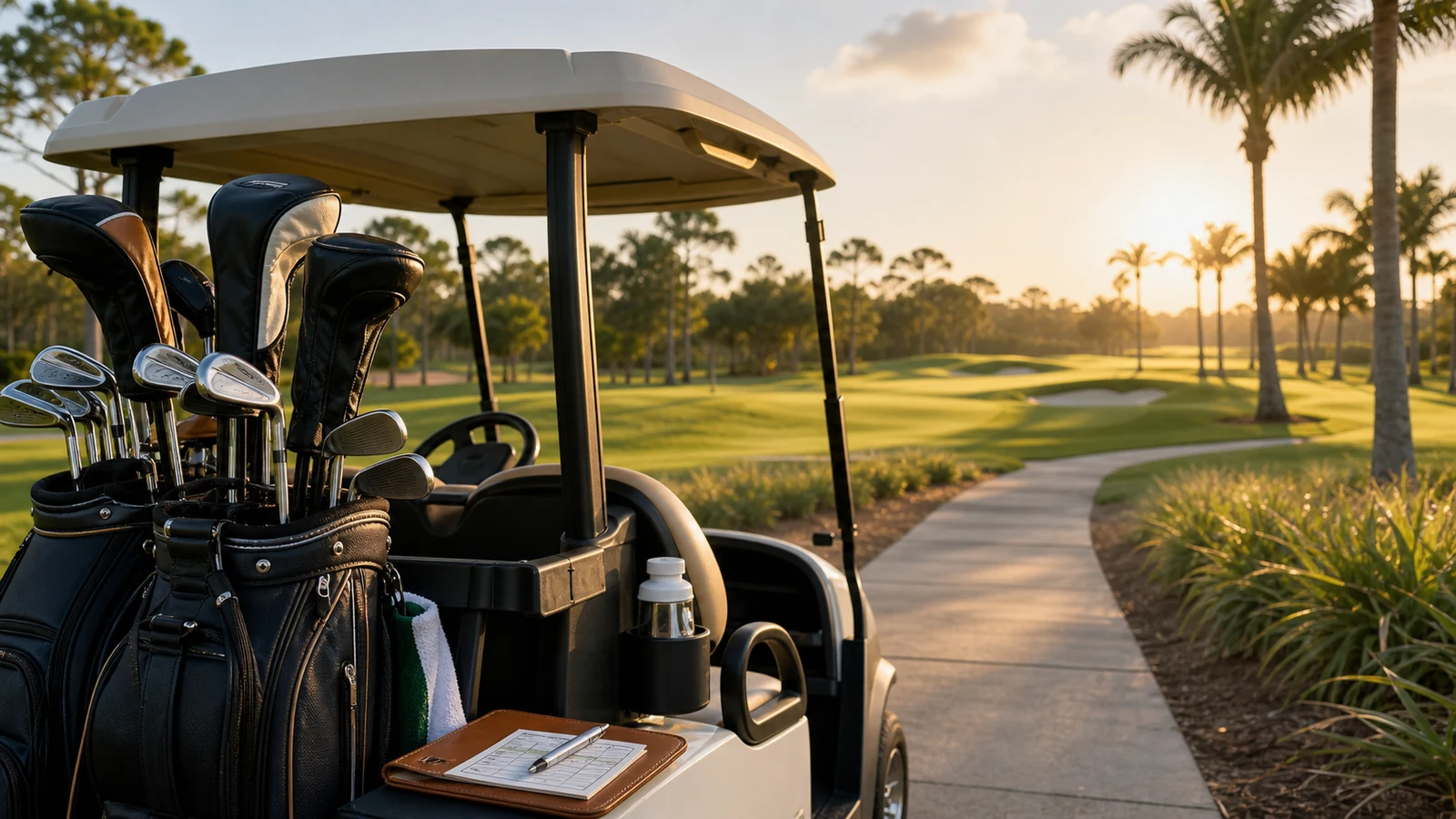
Timing: The Blueprint for a 36-Hole Day
The schedule that actually works looks like this:
- 6:00 a.m., Arrive at course one. Pick up range balls, hit for 20 minutes, roll a few putts. Do not skip this.
- 7:00 a.m., Tee off round one. Aim to play at a solid but not frantic pace.
- 11:00-11:30 a.m., Finish round one. Eat a real meal, not just a granola bar. Grilled chicken sandwich, a banana, plenty of water. Refill your bottles.
- Noon, Tee off at course two. You'll be warm and loose from the morning round, so the range is optional here.
- 4:15-5:00 p.m., Finish round two. Cold beverage of your choice. You earned it.
The biggest mistake people make is rushing the lunch break. Twenty minutes between rounds sounds efficient, but you'll pay for it by hole 30. Give yourself at least 45 minutes to eat, sit down, let your back decompress, and get your head right for a second 18. The courses aren't going anywhere.
According to the USGA's pace of play guidelines, a standard 18-hole round should take no more than 4 hours and 30 minutes for a foursome. Build your day around that expectation and you'll have a comfortable buffer.
The Best Course Pairings
Here are four tested pairings that make logistical and experiential sense.
The Budget Double: Eastwood + Coral Oaks
This is the go-to pairing for locals who want 36 holes without a hefty green fee. Eastwood Golf Course is a city-owned track in Fort Myers that plays to a full 6,772 yards from the tips.
Check Eastwood's city-published fee schedule for your date and starting time.
After the round, the drive to Coral Oaks Golf Course in Cape Coral takes about 15 minutes. Coral Oaks is a Gordon Lewis design that opens up compared to Eastwood, wider fairways, a different strategic flavor, and some of the best-maintained greens you'll find on a municipal course in Florida.
For Coral Oaks, obtain the current quote separately. Add both totals and travel time before committing to the pairing.
The Local Pairing: Fort Myers Country Club and Eastwood
Fort Myers Country Club has been part of the community since 1916. It's a classic layout, shorter by modern standards, but it tests every part of your game and the history of the place gives the round a different feel than a newer design.
Use Fort Myers Country Club's current city fee schedule, including any separate walking and riding rates.
Pair Fort Myers Country Club with Eastwood only after checking the route and both tee times. Old Corkscrew is no longer an available second round.
Keep enough time for the first round, a meal, travel and second-course check-in. Do not rely on a guaranteed four-hour finish.
The Naples Pairing: Lely's Public Courses
If you want the full resort experience and budget isn't the primary concern, this pairing delivers. Lely Resort's Flamingo Island Course is a Robert Trent Jones Sr. design that winds through mature cypress and creates memorable risk-reward situations throughout.
Request a dated quote for Flamingo Island and confirm whether a same-day second round is available.
Mustang is Lely's other public course. The Classics is private. TPC Treviso Bay is a separate seasonal-access inquiry, not an automatic public afternoon booking.
"Always a pleasure playing at TPC Treviso. Nice layout and challenging holes with fast greens."
napolidon2012, GolfPass review
Confirm both course names and starting times in the reservation. Any replay price is subject to the operator's terms and availability.
The Bonita-Estero Loop
The Bonita Springs and Estero corridor has a cluster of options that pair naturally. For anyone exploring that area, the complete guide to golf in Bonita Springs and Estero covers the options in depth.
Pick two courses that have confirmed public access for your visit. Do not assume a private community opens its course to visitors on weekdays.
Green Fees: What You'll Actually Pay
Here's a realistic breakdown by category:
| Pairing | Budget check | Booking check |
|---|---|---|
| Eastwood and Coral Oaks | Add two dated all-in quotes | Use each operator's window |
| Fort Myers Country Club and Eastwood | Compare walking and riding terms | Allow travel and check-in time |
| Lely Flamingo Island and Mustang | Ask about an available replay offer | Confirm both course reservations |
Confirm walking rules and any price difference with each course. In heat or fatigue, reduce exertion and be willing to shorten the day.
What to Bring and How to Pace Yourself
Thirty-six holes in Florida heat is not a casual undertaking. The conditions are manageable but they require some preparation:
- Water: At least 64 ounces per round. More in summer. The starter shacks at most courses sell water, but bringing your own keeps you from skipping refills.
- Sunscreen: Apply before round one and reapply at the turn of round two. Six-plus hours of Florida sun is not the same as a round back home in March.
- Snacks between nines: Trail mix, bananas, a sandwich at the turn. Don't rely on the halfway house being open or affordable.
- A light change of shirt: Sounds minor. Makes round two feel like a fresh start.
- Ibuprofen: Optional but appreciated somewhere around hole 28.
Mentally, the second round goes better if you lower your expectations slightly. You're not trying to shoot your career low in round two, you're trying to play steady, make smart decisions, and enjoy the back half of a long and satisfying day.
The golfers who struggle are the ones who fight their fatigue instead of accepting it and adjusting.
The National Weather Service Miami office covers Southwest Florida and posts detailed daily forecasts that include afternoon storm probability. In summer months especially, check the forecast the evening before.
A 4 p.m. thunderstorm warning on your second round can change the whole plan.
Best Months to Attempt This
You can technically play 36 holes any month of the year here, but some windows are better than others.
- November through February: Ideal temperatures, lower humidity, long enough days. The tradeoff is higher green fees and busier courses during peak season.
- March and April: Still great weather, courses are at their best, and you get the added daylight of late spring. This is the sweet spot.
- May through September: Hotter and more humid, with afternoon storm risk. Doable, but you need to start earlier and keep a close eye on the weather.
- October: Shoulder season, lower fees, quieter courses, and weather that's usually decent. A sleeper month for this kind of day.
FAQ
Is it realistic to play 36 holes in one day if I'm not a low handicapper?
Yes, with caveats. Pace of play matters more than score.
If you're comfortable taking gimme putts, playing ready golf, and keeping the round moving, 36 holes is manageable regardless of handicap. The key is not getting bogged down on holes that aren't working.
Pick up when you need to, keep pace, and the day stays enjoyable.
Do I need to book both tee times on the same day?
Reserve each round when its booking window opens. Confirm both starts and leave enough time between them; one course's release window may differ from the other's.
What if I run behind schedule on the first round?
Call ahead to the second course and let them know you're running 30 minutes late. Most starter desks will work with you, especially on slower afternoons.
The worst thing you can do is rush through the back nine of round one and show up frazzled. A brief phone call usually buys you the flexibility you need.
Are there courses in Southwest Florida that offer a 36-hole package?
A few resort complexes with multiple courses on property, like Lely Resort, occasionally offer day packages that cover two rounds on different layouts. It's worth asking directly when you book.
More often, you'll be piecing together two separate tee times, which gives you more flexibility in pairing anyway.
How far in advance should I plan this?
Use each operator's current booking window rather than a region-wide lead time. A fixed-date trip needs confirmed reservations, not an assumption of availability.