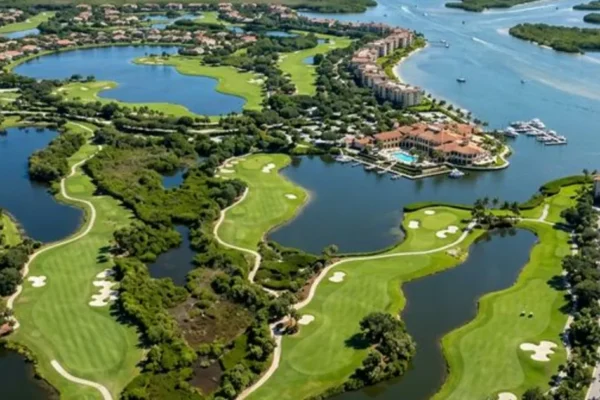
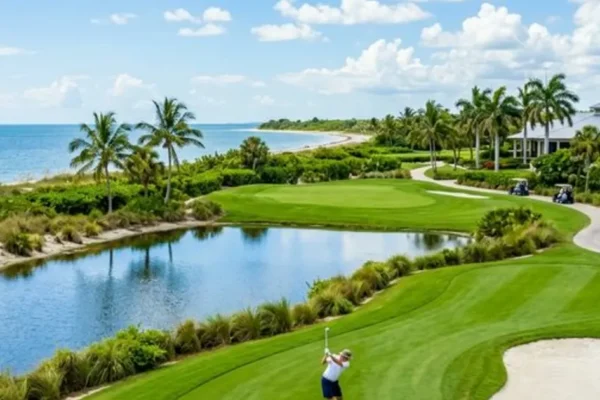
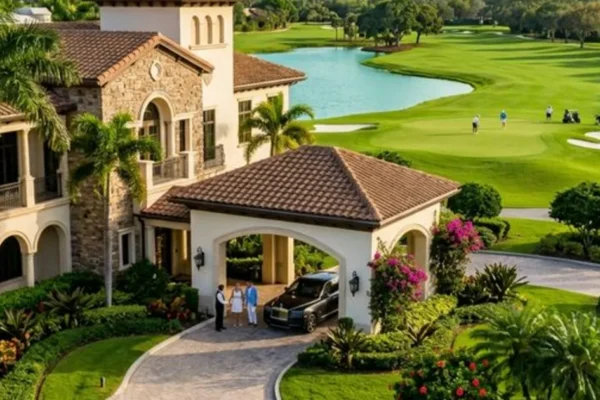
Naples, Florida didn't become the golf capital of the world by accident. It happened through a century of deliberate development, wealthy winter residents with a passion for the game, and a real estate industry that understood golf courses weren't just amenities, they were the product itself.
Here's how it all unfolded.
Key Takeaways
- Golf arrived in Naples in the 1920s alongside the first wave of wealthy winter tourists, and the two industries have been inseparable ever since.
- By the 1980s and 1990s, private golf communities became the dominant real estate model in Collier County, driving both population growth and course construction.
- Naples consistently ranks among the highest concentrations of golf holes per capita in the United States, often cited as the highest in the world.
- The area has hosted LPGA and PGA Tour-affiliated events, cementing its national profile as a serious golf destination.
- New course development has slowed, but renovation, sustainability, and high-end public access are shaping the next chapter of Naples golf.
The Earliest Days: Golf Comes to Naples in the 1920s
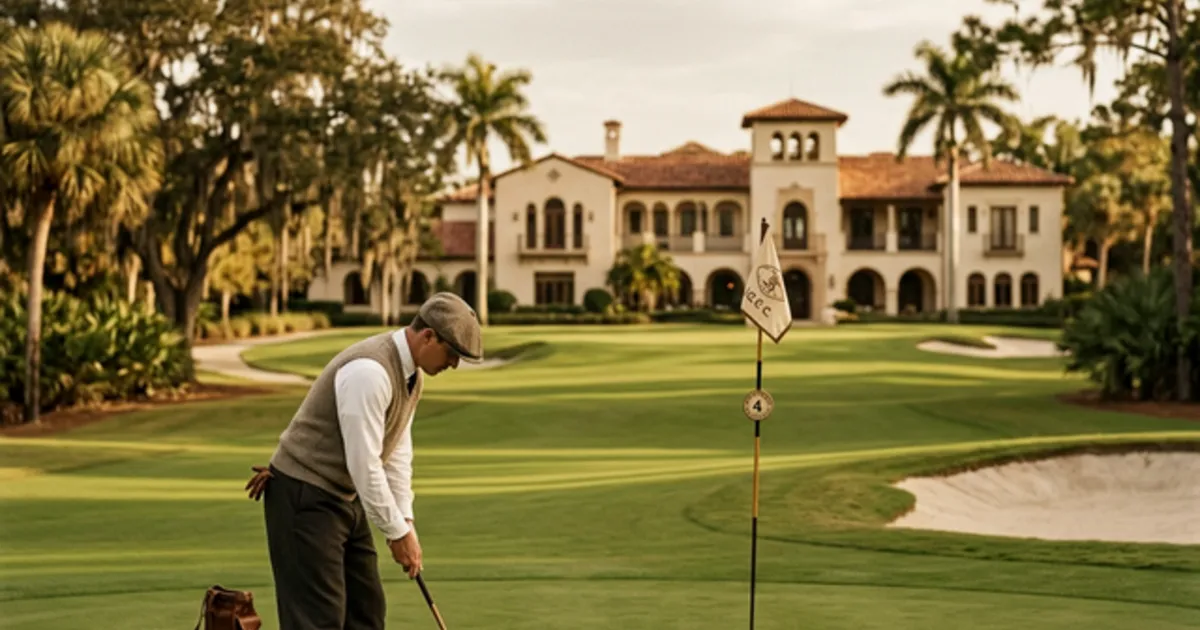
Naples in the early twentieth century was a tiny fishing village, population in the hundreds, accessible mainly by boat or a rough unpaved road down from Fort Myers. What changed everything was the arrival of the railroad, winter tourism, and the first generation of well-heeled visitors looking for somewhere warm to spend January and February.
The Naples Hotel, the town's first real landmark, opened in 1889 and attracted Northern industrialists and their families. By the 1920s, a few of those families wanted to play golf.
The earliest informal courses in the area were rudimentary, mowed fairways, sand greens, little else. But they established something important: golf was part of what Naples offered.
The Naples Golf and Beach Club was organized in the 1920s, representing the first genuine effort to build a proper golf facility in Collier County. It was a social institution as much as a sporting one, catering to the winter colony that would arrive each November and stay through April.
That seasonal rhythm, one that still defines Southwest Florida golf today, was established in those early decades.
The Great Depression and World War II slowed development considerably, but they didn't stop it entirely. Naples remained small, quiet, and largely off the radar for most of the country. That was about to change.
Postwar Growth and the Real Estate Connection (1950s, 1970s)
The postwar economic boom transformed Southwest Florida. Returning veterans, growing middle-class wealth, and the expansion of air travel made Florida accessible to a much broader market.
Naples, still small but increasingly known as a refined alternative to Miami's flash, began attracting a different kind of buyer: people who wanted a second home and a quieter lifestyle.
The connection between golf and real estate became explicit in this era. Developers figured out early that a golf course on a property map was the single most effective marketing tool available.
It didn't just add value to adjacent lots, it created a reason for buyers to visit, to stay, and ultimately to purchase. Communities began organizing themselves around golf courses rather than the other way around.
By the 1960s, Naples had a handful of functioning clubs and was building a regional reputation. The surrounding land, flat, sub-tropical, and available in enormous tracts, was ideal for golf course construction.
Water management was a challenge, but Florida developers were becoming expert at it. The same drainage systems that made low-lying land buildable also created the lakes and water features that would define the aesthetic of Southwest Florida golf.
Fort Myers, just to the north, was developing along similar lines. The Fort Myers Country Club, one of the oldest established golf facilities in the region, reflects that era of deliberate community building around the game.
"This is what great affordable golf should be like."
TimGavrichGP, GolfPass review
These weren't just recreation facilities, they were anchors for entire neighborhoods and towns.
The Private Club Boom: 1980s and 1990s
Nothing in the history of Naples golf compares to what happened between 1980 and 2000. The population of Collier County grew from roughly 85,000 to nearly 250,000 in those two decades, and almost every major development of that era was built around golf.
The math was straightforward: buyers with money wanted privacy, prestige, and a place to play. Developers gave them all three.
Private golf communities proliferated across Naples and its surrounding areas. Pelican Bay, Tiburon, Grey Oaks, Mediterra, Quail Creek, Kensington, Wyndemere, the list of master-planned golf communities that came online in those years is long.
Each one followed a similar model: hire a recognizable course designer, build 18 to 36 holes, surround them with custom homes, and sell memberships and real estate as a package.
Grey Oaks Country Club, with its 54 holes across three distinct courses, became one of the premier examples of this model, a community where golf wasn't just available but was architecturally central to the entire property. Communities like this drew buyers from across the country, and the word spread: if you wanted world-class private golf in a warm-weather setting, Naples was the place.
The designers who worked in Naples during this period read like a who's-who of golf architecture. Rees Jones, Arthur Hills, Tom Fazio, Jack Nicklaus, all built or renovated courses in Southwest Florida.
Their involvement wasn't incidental. It was a deliberate strategy by developers to attach prestige to their projects, and it worked.
If you're thinking about joining one of these communities today, the landscape of membership options, costs, and what's available has changed considerably. Our guide to private golf club membership in Naples covers what you need to know before making that commitment.
Notable Clubs and Their Stories
A few clubs stand out for what they represent in the broader history of Naples golf.
Tiburon Golf Club, built on the grounds of the Ritz-Carlton Golf Resort in the late 1990s, brought Greg Norman into the Naples story as both designer and brand ambassador. The two courses at Tiburon, the Gold and the Black, were built to tournament standards, and they've delivered on that promise.
The Tiburon Golf Club Gold Course in particular has hosted events that put Naples on national television.
TPC Treviso Bay brought the Tournament Players Club name to the area. Its association's published FAQ describes May-October outside play subject to annual change; historical access should not be treated as a current winter public offer.
"Always a pleasure playing at TPC Treviso. Nice layout and challenging holes with fast greens."
napolidon2012, GolfPass review
It's a meaningful data point in the history of Naples golf: even as private clubs dominated, there was an audience for high-quality public-access play.
Old Collier Golf Club occupies a unique position in this history. Opened in 2001 and designed by Tom Fazio, it was conceived from the start as one of the most exclusive private clubs in the country, not just in Naples, but anywhere.
With a small membership, no real estate attached, and a focus on the golf experience itself, Old Collier represents the purist end of the Naples golf spectrum. It consistently appears on national rankings of the best golf courses in Florida and the United States.
The Naples Historical Society maintains records and photographs documenting the development of the town from its earliest days, and the golf clubs of each era are woven throughout that story, reflecting not just leisure but the economics and social structure of each decade.
Golf Per Capita: Naples at the Top
The numbers are striking. Naples and the surrounding Collier County area has, by most counts, more golf holes per resident than anywhere else in the United States, and some surveys put it at the top globally.
Depending on the methodology, there are somewhere between 90 and 100 golf courses within reasonable driving distance of downtown Naples, serving a year-round population of roughly 400,000 people in the greater county area.
That ratio, one course for every few thousand residents, reflects both the density of private club development and the sustained demand from a wealthy, golf-oriented population. It also creates a competitive environment that has generally kept course quality high.
Clubs and developers know that golfers here have options, and mediocrity doesn't survive.
Golf Digest has repeatedly featured Naples-area courses in its national rankings, and the concentration of high-rated tracks in a single metropolitan area is unusual by any standard. For golfers who move to Naples or visit regularly, the options are genuinely extraordinary, something that took decades of investment and development to create.
For visitors who want to experience that variety without a club membership, there are strong public options throughout the area. Our list of the Naples visitor golf and access guide is a good starting point for planning a golf trip.

Tour Events and National Spotlight
Naples has earned its place on the professional golf calendar, though the relationship with tour events has evolved over the years.
The LPGA Tour has been a consistent presence in Southwest Florida. The area's combination of quality courses, affluent sponsorship base, and ideal winter weather made it a natural home for tour stops.
Events held at Tiburon Golf Club brought the best women's players in the world to Naples and gave the club and the region national television exposure. The Pelican Women's Championship at Pelican's Nest in Bonita Springs has been part of the LPGA schedule in recent years, further cementing Southwest Florida's connection to professional women's golf.
On the men's side, the PGA Tour Champions, the senior tour, has held events in the area, and regional qualifiers and developmental tour events have been played at various Naples-area courses over the decades. The PGA Tour infrastructure in the region reflects the seriousness with which Naples takes professional golf, both as entertainment and as a driver of tourism and real estate interest.
Tiburon's Gold Course hosted the Franklin Templeton Shootout for many years, a made-for-television event featuring two-player teams that became a beloved part of the Southwest Florida holiday calendar. It brought marquee names to Naples each December and showcased the course to a national audience.
The Future of Golf in Naples
The era of building new golf courses in Naples is largely over. Land is expensive, environmental regulations in South Florida are strict, and the market is already well-supplied. The next phase of Naples golf is about renovation, adaptation, and sustainability.
Major clubs throughout the area have undertaken significant renovation projects in recent years, upgrading greens to modern turf varieties, improving irrigation systems for water efficiency, and rethinking bunker strategies for contemporary maintenance standards. These investments reflect a commitment to long-term quality rather than expansion for its own sake.
There's also a growing conversation about accessibility. The private club model served Naples well for decades, but a generation of younger golfers and seasonal residents is looking for high-quality experiences without the commitment and cost of full private membership.
Semi-private and public courses are responding to that demand, and the best of them are competing seriously with private alternatives on conditioning and experience.
Climate is the other factor that nobody in Southwest Florida ignores. Hurricanes, flooding, and long-term sea level considerations are part of every major infrastructure decision in Collier County, and golf courses are no exception.
The courses that thrive over the next 25 years will be the ones that invest in resilience, better drainage, hardier turf, and facilities designed to recover quickly after major weather events.
What won't change is the fundamental appeal. Naples is, and will remain, one of the great golf destinations in the world.
The combination of climate, course quality, and sheer variety is difficult to replicate anywhere else. The history covered here, from sand greens in the 1920s to Tom Fazio masterpieces in the 2000s, is the foundation on which the next century of Naples golf will be built.
Frequently Asked Questions
When did golf first come to Naples, Florida?
Golf arrived in Naples in the 1920s, brought by wealthy winter tourists from the North who were already familiar with the game. The Naples Golf and Beach Club was among the first organized golf facilities in the area, established as a social and sporting institution for the seasonal winter colony.
How many golf courses are in Naples, Florida?
Depending on how you define the Naples metro area, there are roughly 90 to 100 golf courses within easy reach of downtown Naples. This concentration makes Collier County one of, if not the, highest golf-per-capita areas in the world.
Has Naples hosted professional golf tournaments?
Yes. Naples has hosted LPGA Tour events, PGA Tour Champions events, and the long-running Franklin Templeton Shootout at Tiburon Golf Club.
The Pelican Women's Championship in nearby Bonita Springs has also been part of the LPGA schedule. Southwest Florida's winter weather and quality courses make it a natural fit for professional golf.
What are the most prestigious golf clubs in Naples?
Old Collier Golf Club consistently ranks among the top private courses in the country. Grey Oaks, Tiburon, and Mediterra are also considered among the most exclusive and well-regarded clubs in the area.
The region has a deep bench of quality private facilities, which reflects decades of investment and competition for discerning members.
Why did so many golf courses get built in Naples?
The combination of real estate economics, available land, favorable climate, and a wealthy seasonal population drove the construction boom, particularly between the 1980s and early 2000s. Developers used golf courses as the centerpiece of master-planned communities, and buyers responded.
The result was a concentration of courses that remains unmatched in most of the country.
Can visitors play golf in Naples without a club membership?
Absolutely. While Naples is known for its private clubs, there are quality public and semi-private courses available to visitors.
For visitor golf, compare Lely's public courses and Tiburon. TPC Treviso Bay needs a current seasonal eligibility check. Our Naples visitor golf guide separates public bookings from private-club arrangements.
auto_stories Recommended Reading