Southwest Florida is one of the most architect-rich golf destinations in the country. The names behind its best courses read like a hall of fame roll call, Nicklaus, Fazio, Norman, Palmer.
Each brought a distinct design philosophy to the region, and you can feel those differences the moment you step onto the first tee.
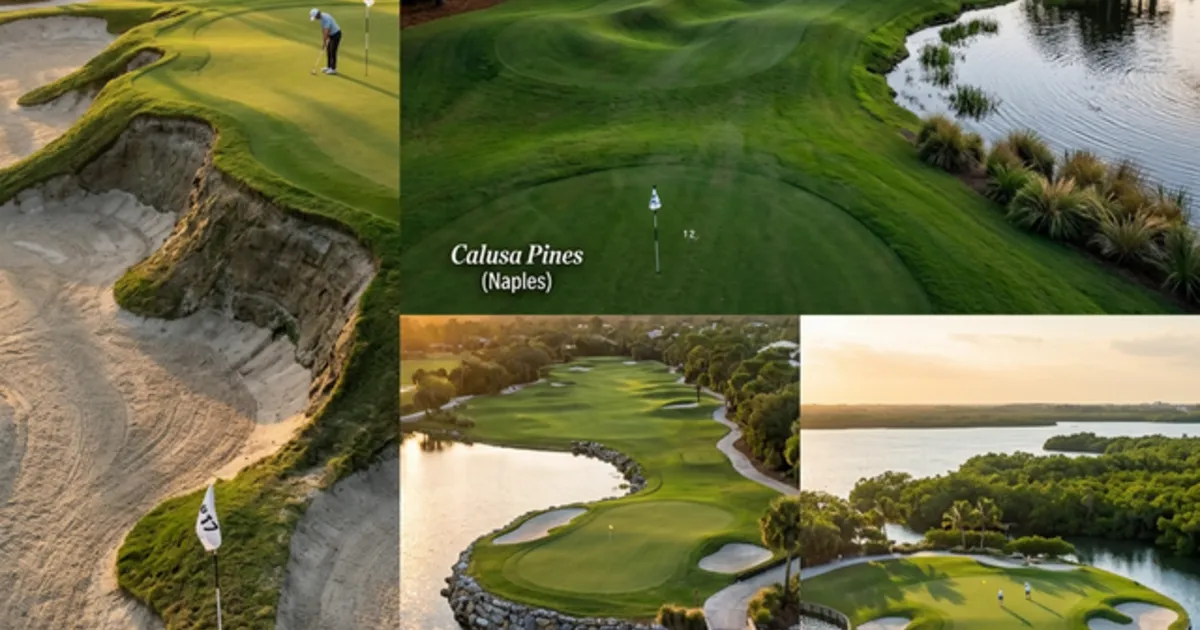
Key Takeaways
- Southwest Florida attracted some of the biggest names in golf course design, each leaving a signature style on the landscape.
- Jack Nicklaus, Tom Fazio, and Greg Norman each prioritized strategic challenge, rewarding the smart player over the long hitter.
- Arthur Hills and Gordon Lewis built careers on integrating natural Florida terrain rather than reshaping it.
- Robert Trent Jones Sr. and Gary Player brought international perspectives that gave Lely Resort two very different personalities.
- Arnold Palmer's Wildcat Run leans into playability and warmth, traits that defined his approach throughout his design career.
- Knowing who designed a course before you play it will change how you read it.
Jack Nicklaus: Old Corkscrew's Former Layout
Jack Nicklaus didn't just design courses, he designed tests. His philosophy centers on the idea that a course should reward the player who thinks before swinging.
Old Corkscrew's former Estero layout illustrates Nicklaus's approach to angles and strategy. Daily golf operations have ended, so this is a historical reference rather than a playing recommendation.
Miss the right side of the fairway and you're staring at a back pin tucked behind a slope. Position matters here the way it mattered to Nicklaus when he played at Augusta or Pebble Beach.
Old Corkscrew also reflects Nicklaus's later-career maturity as a designer. His earlier work could be brutally penal.
By the time this course came along, he had softened his approach, multiple tee options, wider corridors for recreational players, while keeping the scoring pressure on anyone chasing a low number.
Tom Fazio, Bonita Bay and The Club at Gateway
Tom Fazio is widely considered the finest golf course architect of the modern era. He designed multiple courses at Bonita Bay Club and shaped The Club at Gateway in Fort Myers into one of the region's most polished private experiences.
Fazio's signature is seamlessness. His courses look like they were always there, no abrupt transitions, no jarring earthworks, no hole that screams "man-made." He uses natural contours and existing vegetation as structural elements, which in Florida means marshes, pines, and palms become as important as bunkers and water carries.
His bunkers tend to be bold and dramatic visually but positioned to catch careless play more than good play. Gateway's routing through diverse terrain, open meadows, tree-lined corridors, lakeside holes, shows his range within a single course.
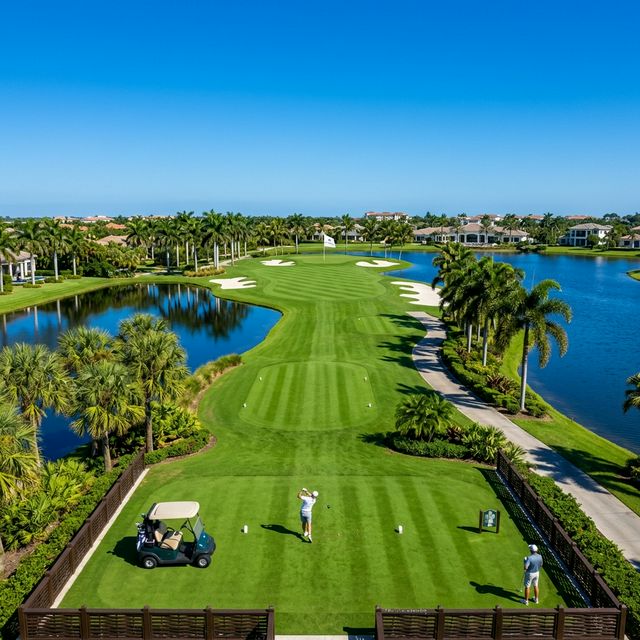
Arthur Hills, Coral Oaks and Bonita Bay
Arthur Hills built a reputation on working with what the land gives him. His firm became a go-to choice for Florida courses because he understood how to use flatness and water as assets rather than problems to engineer around.
Coral Oaks Golf Course in Cape Coral is his most accessible work in the region, a municipal course that plays above its price point, with clear visual targets and enough variety to keep a round interesting. At Bonita Bay, he worked within a more upscale private context and dialed up the strategic complexity while keeping that characteristic smoothness of routing.
Gordon Lewis, Eastwood and Eagle Ridge
Gordon Lewis is the local architect on this list, and his insider knowledge of Florida golf shows. Based in the region, Lewis built courses that feel native to Southwest Florida in a way that out-of-state designers sometimes miss.
He works with the existing ecology rather than against it, and his routing decisions typically reflect a deep familiarity with how Florida golfers actually play the game.
Eagle Ridge is a Gordon Lewis course in Fort Myers. Eastwood should not be attributed to him: the City of Fort Myers credits Robert von Hagge and Bruce Devlin, and describes an 18-hole layout, not 27 holes.
"I had to check my receipt again because I couldn't believe I was playing such a fine course for the amount I paid. The layout was challenging, the fairways were excellent and the pace of play was comfortable."
jetsamjosi, GolfPass review
Lewis has a gift for making a flat Florida site feel dynamic without importing truckloads of fill dirt.
What separates Lewis from his contemporaries is that his courses are built for golfers who play them week after week. The strategy changes with pin positions and wind rather than gimmicks, which is why the replay value holds up.
Robert Trent Jones Sr., Lely Flamingo Island
Robert Trent Jones Sr. is the grandfather of modern golf course architecture. His career spanned six decades and produced more than 500 courses worldwide.
By the time he designed the Flamingo Island Course at Lely Resort in Naples, he had already reshaped Augusta National and built courses on every continent. His influence on the profession is difficult to overstate.
The Flamingo Island Course carries his hallmarks: large, undulating greens that demand precise approach play, strategic bunkering that frames decision-making throughout the round, and a layout that flows naturally through the landscape. Jones believed a great golf hole should offer a difficult par and a comfortable bogey, that philosophy is built into every hole here.
The course is long from the tips but thoughtful from the middle tees, which is exactly how Jones thought about accessibility across skill levels.
Gary Player, Lely Classics
Gary Player approached course design the same way he approached fitness and preparation, with discipline and a global worldview. His Classics Course at Lely Resort sits alongside the Jones-designed Flamingo Island and offers a striking contrast in personality.
Player's design philosophy emphasizes shot-making over power. His courses reward the player who shapes the ball, a natural reflection of his own game.
The Classics has a more intimate feel than Flamingo Island, with tighter corridors and sharper penalties for wayward shots. The routing flows logically and the transitions between holes feel intentional, Player believed a great course should feel like a journey, and the Classics delivers that.
Greg Norman, Tiburon Golf Club
Greg Norman brought his aggressive playing style into his design work. His courses tend to be bold, wide fairways that open up risk/reward decisions, dramatic bunkering, and greens that punish the wrong quadrant.
Tiburon Golf Club at the Ritz-Carlton Golf Resort in Naples is among the most visually striking courses in Southwest Florida, and it has hosted PGA Tour events that have tested the best players in the world.
Norman's courses have a consistent identity: they look great, play tough from the back tees, and photograph well. Tiburon's Gold Course is a prime example. The bunkering is aggressive and the greens have enough movement to make a two-putt feel like an accomplishment when you're on the wrong level.
Arnold Palmer, Wildcat Run
Arnold Palmer's design work reflected his personality, warm, approachable, and focused on the joy of the game rather than its difficulty. Wildcat Run Golf and Country Club in Estero captures that spirit.
Palmer and his design partner Ed Seay built courses for people who love golf, not just people who are good at it. Wildcat Run has a classic Florida feel, water in play on most holes, bunkering that's more decorative than punishing, and a routing that builds momentum through the back nine.
The risk/reward decisions are clearly presented rather than hidden, which is a Palmer trademark.
Palmer's courses don't typically show up on architecture lists the way Fazio's or Norman's do, but they deliver something arguably more important: a layout that members want to play every weekend without feeling beaten down. That's a harder goal to hit than it sounds.
What These Architects Have in Common
These eight designers came from different backgrounds, worked in different eras, and brought very different instincts to the drawing table. But they share a few things worth noting:
- Each one treated Southwest Florida's natural features, water, native vegetation, the flat terrain, as opportunities rather than obstacles.
- All of them built courses that have held up over decades without requiring constant major renovation.
- They understood that golfers at all skill levels need to feel the course is fair, even when it's difficult.
The result is a regional golf landscape that's more architecturally diverse than most visitors expect. You can play a Fazio course in the morning, a Jones classic in the afternoon, and a Norman showpiece the next day, all within 30 minutes of each other.
For deeper context on golf course architecture and how these designers developed their philosophies, the Golf.com architecture section and the Golf Course Architecture magazine are worth bookmarking. The American Society of Golf Course Architects also maintains a solid archive of designer profiles and design philosophy essays.

FAQ
Who is considered the most influential golf course architect in Southwest Florida?
Tom Fazio has the broadest footprint in the region, with multiple courses at Bonita Bay and his work at Gateway. Robert Trent Jones Sr. carries the deepest historical significance given his role in shaping modern golf course design globally.
Can the public play courses designed by these architects in Southwest Florida?
Coral Oaks, Eagle Ridge, Tiburon and Lely's Flamingo Island and Mustang offer public booking options. Eastwood is public and was designed by Robert von Hagge and Bruce Devlin. The Classics at Lely and Wildcat Run are private; Old Corkscrew has ended daily operations.
What makes Southwest Florida particularly attractive to major golf course architects?
The region's rapid development from the 1970s through the 2000s created strong demand for golf courses tied to real estate communities. Developers with large budgets hired marquee names to attract buyers.
The year-round climate also makes these courses financially viable in ways that northern markets can't match.
Are there differences between a Nicklaus course and a Palmer course in terms of difficulty?
Generally, yes. Nicklaus courses tend to be more demanding, with strategic bunkering and approach angles that reward precise shot placement.
Palmer courses lean toward playability and clear decision-making. Both designers offered multiple tee options, but the playing experience from the same tees will often feel more demanding on a Nicklaus layout.
Is Gordon Lewis as accomplished as the other architects on this list?
Lewis doesn't have the national name recognition of a Fazio or Norman, but his courses in Southwest Florida are highly regarded by the golfers who play them regularly. His deep familiarity with local conditions and his focus on long-term playability make his work stand up well against more famous names in the region.
Which Southwest Florida course by these architects has hosted professional events?
Tiburon Golf Club's Gold Course (Greg Norman) has hosted the PGA Tour's QBE Shootout, one of the tour's most popular team events. Lely Resort has also hosted professional and senior tour events over the years.