Key Takeaways
- 2026 was one of the busiest peak seasons in recent memory for Southwest Florida golf, with longer stays and stronger visitor volume driven partly by the continued flexibility of remote work arrangements.
- Renovation work wrapped up at several significant courses, including agronomy upgrades at TPC Treviso Bay and drainage fixes at older Fort Myers-area layouts that had struggled through two consecutive heavy wet seasons.
- Private and semi-private club membership demand stayed well ahead of supply across the region, with waitlists at desirable Naples clubs still stretching past a year in most cases.
- The early-summer storm period, notably wetter than average from late May through July, compressed maintenance windows and pushed several operators to accelerate infrastructure investments.
- No major new courses opened in 2026, but a handful of properties changed ownership or quietly shifted their access model, reflecting the land-constrained reality of golf development in this market.
Southwest Florida golf in 2026 was not a quiet year. Membership demand outpaced supply at clubs across Collier and Lee counties, a summer storm season disrupted maintenance calendars in ways that will still be felt in 2027, and a renovation cycle at several notable courses finally delivered on work deferred through 2024 and 2025.
"Always a pleasure playing at TPC Treviso. Nice layout and challenging holes with fast greens."
napolidon2012, GolfPass review
This is a year-in-review covering events, course changes, membership trends, weather, and the industry shifts that shaped the year for golfers who play here, live here, or are figuring out what the market looks like right now.
Southwest Florida is one of the most golf-dense markets in the country, something the per-capita course density data makes clear in ways that still catch people off guard. But density doesn't mean static.
The region's golf scene shifts based on development economics, operator decisions, weather, and who's moving into the market permanently. 2026 moved on all of those fronts.
Major Events and Tournament Results
The competitive calendar was anchored by the Korn Ferry Tour event at TPC Treviso Bay. The Arthur Hills design continues to be one of the more credible developmental tour venues in Florida, long enough, technical enough on the greens, and well-conditioned enough to genuinely test players working toward a PGA Tour card.
The 2026 event drew solid weekend crowds, and the hospitality operation around it has matured to where the experience holds up as an actual event, not just golf happening on a course.
At the amateur level, the Southwest Florida Golf Association ran a full schedule in 2026 with participation up from 2025. Club championship play in the Naples area was particularly competitive in the mid-handicap brackets, a function of newer members arriving with established games.
The senior amateur circuit had unusually deep fields at multiple events, attributed to the growing number of competitive golfers relocating permanently to the region rather than splitting time between two addresses. That shift has been visible in club rosters for a few years, and 2026 was the year it showed up in results.
Course Renovations: What Got Done
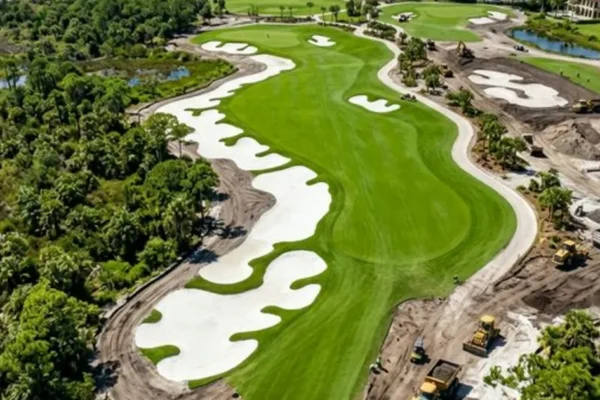
TPC Treviso Bay completed agronomy system upgrades in 2026 that had been in the planning queue since late 2024. The work centered on turf management systems and green surface consistency, the kind of project that matters when a course is trying to hold Tour-caliber conditions year-round rather than just during peak season.
For everyday golfers who play Treviso Bay, the improvements show up as more consistent putting surfaces from one month to the next.
On the Fort Myers side, several older layouts invested in drainage infrastructure after two back-to-back heavy wet seasons exposed weaknesses. Some of it was insurance-driven, some was deferred maintenance finally getting funded, and some was ownership groups responding to competitive pressure.
A golfer who hits cart-path-only conditions two rounds in a row has a deep bench of alternatives in this market, that reality keeps operators honest about conditions in a way that less golf-dense markets simply don't generate.
Old Corkscrew Golf Club in Estero continued its incremental maintenance program without any dramatic changes. The Jack Nicklaus design holds up well because it was built with enough natural drainage and strategic variety that it doesn't require constant intervention to stay interesting.
"One of best in Fort Myers/Naples area. Scenic well designed tour quality Jack Nicklaus course. Difficult to score well but enjoyable and challenging. Must play."
krv1950, GolfPass review
The course also saw an uptick in visitor traffic in 2026, attributed partly to better online visibility and partly to word-of-mouth from the growing permanent resident base in the Estero corridor. Tiburon Golf Club's Gold Course at the Ritz-Carlton maintained its position as the region's most demanding resort layout, with ongoing conditioning investment but no structural changes.

New Openings and Property Changes
Ground-up golf development in Southwest Florida is constrained by land economics that make it nearly impossible to justify outside of very specific circumstances. Buildable land with a golf course footprint is scarce and expensive, which means true new openings are rare.
What 2026 offered instead was a handful of repositioned properties, courses that changed ownership, rebranded, or shifted their access model from private to semi-private or vice versa.
The most notable shift was at several previously private Collier County clubs that opened limited outside-play windows on weekdays during the off-season, typically through direct inquiry rather than any public booking channel. The financial reality is straightforward: maintaining a private club in a high-cost-of-living market requires either very high dues or supplemental revenue.
The clubs doing this in 2026 were doing it quietly, but the direction of travel is clear.
The history of golf in Naples includes multiple cycles of rapid development followed by consolidation, and 2026 looks like a consolidation year, fewer new assets entering the inventory, more attention paid to the quality and financial sustainability of what's already operating. According to the National Golf Foundation, net course closures nationally have slowed significantly compared to the 2008-2018 contraction period, and Southwest Florida has been part of that stabilization story given its consistently strong demand base.
Membership Trends: Waitlists Still the Norm
If one theme defined the business side of Southwest Florida golf in 2026, it's that membership demand stayed well ahead of supply at most desirable clubs. The waitlists that built between 2020 and 2022 did not clear, several clubs reported their lists growing because new applicants were coming in faster than existing members were resigning.
Initiation fees at the upper end of the Naples private club market moved higher again in 2026, continuing a four-year run that has put entry points well above 2019 levels.
The private club constraint has directly benefited semi-private operators. Players who can't get into the clubs they want, or who prefer flexibility without a full membership commitment, pushed daily-fee volume up at several stronger semi-private courses in Naples and Fort Myers.
Green fees at those properties held stable or moved slightly higher in 2026, genuine demand pressure, not speculative pricing.
Weather Impacts: A Disruptive Summer
Peak season, January through April, was clean. Good temperatures, manageable humidity, the kind of conditions that make Southwest Florida the obvious destination for visiting golfers during the winter months.
The early-summer period from late May through July was a different story, with rainfall running significantly above the seasonal average across both Collier and Lee counties.
The practical effect was a compressed maintenance window. Overseeding transitions, fairway aeration, and irrigation work planned for May and June got pushed into August and September at multiple courses.
The rain also accelerated drainage conversations at courses watching their systems closely since 2023 and 2024, insurance pressures and the likelihood of another above-average wet season pushed several operators to move up capital projects they had been deferring. The National Weather Service Miami office documented the period as among the wetter stretches on record for inland Lee County stations.
Industry Changes Worth Watching
Off-course golf entertainment, simulator venues, golf-adjacent social concepts, continued growing in Southwest Florida in 2026. These aren't replacing traditional golf, but they're pulling some recreational spending from green fees and bringing new people into the game, which most operators view as a long-term positive.
GPS cart systems with real-time pace tracking are now common across the region, and courses using the data actively, adjusting tee sheets, flagging slow groups earlier, staffing marshals more precisely, are delivering meaningfully better pace than those that installed the technology and moved on. The difference shows up in the rounds that feel well-managed versus the ones that don't.
The labor picture for course maintenance remained tight. Agronomy staff, equipment operators, and greenskeeping crews are hard to recruit and retain in a market where the cost of living has risen sharply.
Several operators were candid that staffing constraints, not capital, was the primary limit on what maintenance work they could accomplish in 2026, and that pressure isn't easing.
Frequently Asked Questions
What were the biggest course changes in Southwest Florida golf during 2026?
The most visible changes were renovation-driven. TPC Treviso Bay completed agronomy system upgrades, Fort Myers-area courses addressed drainage infrastructure after two difficult wet seasons, and a small number of previously private Collier County clubs opened limited weekday access to outside players.
No significant new courses opened, but several properties changed hands or adjusted their access models in ways that matter to golfers in those specific submarkets.
Are private club memberships still difficult to obtain in Naples in 2026?
Yes, and 2026 did not change the picture. Waitlists at desirable private clubs remain long, initiation fees at the top tier continued moving higher, and the rate of new applications at many clubs outpaced resignations.
The realistic path to membership at a competitive Naples club involves getting on the list early, maintaining contact with the membership director, and planning for a wait measured in seasons. Semi-private courses like Old Corkscrew Golf Club remain the practical alternative for golfers who want quality without the private club timeline.
How did the 2026 summer storms affect Southwest Florida golf courses?
The early-summer period from late May through July was significantly wetter than average, which compressed maintenance windows and disrupted planned agronomy work at multiple courses. Some overseeding and aeration work slid from spring to late summer, meaning the benefits will show up in early 2027 rather than late 2026.
The wet stretch also pushed several operators to act on drainage projects they had been deferring. Peak season itself, January through April, was largely unaffected and played well.
Which Southwest Florida courses are worth playing for a first-time visitor?
Old Corkscrew Golf Club is the top public-access recommendation, a Jack Nicklaus Signature design that plays through natural wetlands in Estero and consistently delivers a better experience than its price point would suggest. TPC Treviso Bay is the right call for golfers who want to play a Tour-affiliated property.
Tiburon's Gold Course at the Ritz-Carlton is the high-end resort option for groups willing to pay for premium conditions and facility experience. For context on how the region's course inventory developed over time, the history of golf in Naples is worth reading before a first trip.
auto_stories Recommended Reading