Key Takeaways
- Keep grips and a spare towel dry, and bring rain gear suited to the forecast.
- Expect wet conditions to change roll and footing; follow the course's cart restrictions.
- If you hear thunder, stop playing and enter a substantial building or enclosed hard-topped vehicle.
- Wait at least 30 minutes after the last thunder and follow the course's reopening instructions. See NWS guidance.
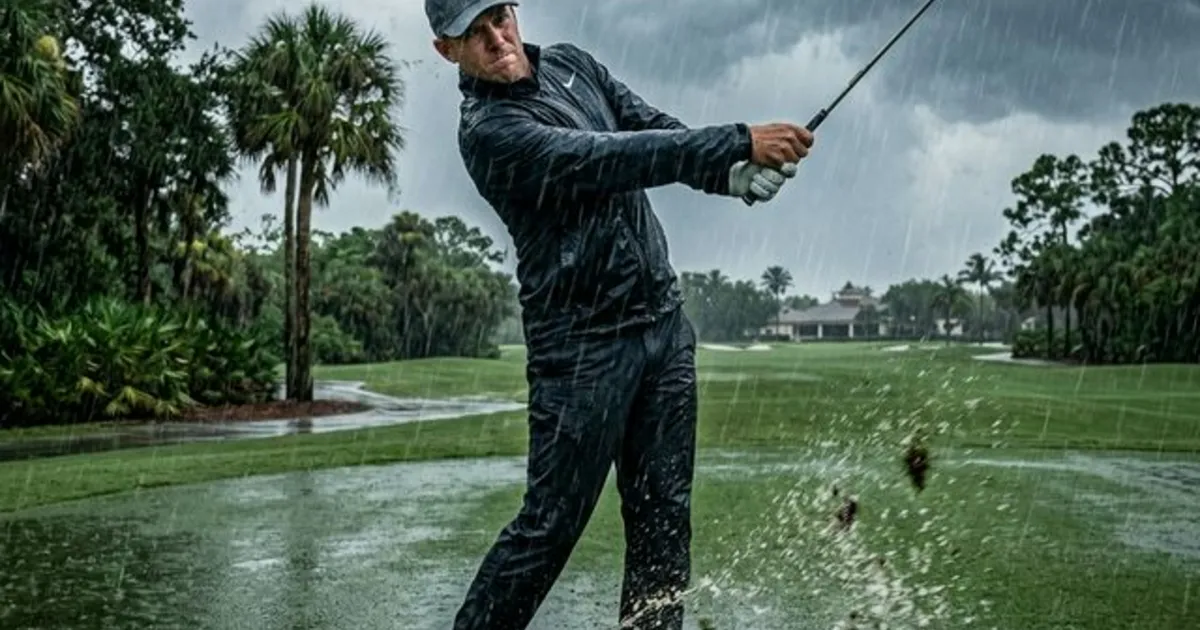
Playing golf in the rain in Florida is not the miserable experience most golfers from drier climates assume it is. In Southwest Florida specifically, a light-to-moderate rain is often the backdrop for some of the most pleasant rounds of the year, cooler temperatures, no crowds, and courses that were just stressed by heat suddenly playing soft and receptive.
The problems start when you are not prepared for it, or when you ignore what the sky is telling you. Here is how to handle both.
Rain Gear Worth Carrying
Most golfers who play in Florida keep a rain suit in the bag year-round. The question is not whether to own one, it is which one to buy and whether it is actually doing the job.
A rain jacket and pants combination rated at 10,000mm hydrostatic head or higher will keep you dry through a normal Florida shower. Below that threshold, the seams start seeping after 20, 30 minutes of steady rain.
The better suits from Galvin Green, FootJoy HydroLite, and Mizuno move with the golf swing without binding at the shoulders, that matters more than you might think when you are trying to make a full turn in the rain on the 14th hole.
Packability is worth considering too. A rain suit that folds into its own pocket and takes up no real bag space is one you will actually carry. The ones that require their own stuff sack tend to stay in the car.
Beyond the suit, bring:
- A golf umbrella, 62 inches minimum. Smaller ones do not cover you and the bag simultaneously, which defeats the purpose.
- A rain hood for the bag. If you do not have one, a large plastic garbage bag works in a pinch, but a dedicated hood keeps club grips dry and that is what you actually care about.
- Waterproof golf shoes rated for full submersion, not just water-resistant. There is a real difference between those two things when you are standing in wet rough or a soggy fairway.

Waterproof Gloves and the Grip Problem
This is where most golfers get into trouble and most rain-round advice falls short. Standard cabretta leather gloves become nearly useless when wet, they stretch, lose tackiness, and give you almost no grip security.
The shot that comes off your hand on a wet follow-through is a real thing, and it is not just embarrassing.
Rain gloves, typically made from a synthetic microfiber, work in the opposite direction. They actually get grippier when wet.
Brands like FootJoy RainGrip, Titleist Players Flex, and Bionic AquaGrip are worth looking at before your next rainy round. The tradeoff is feel: rain gloves are less sensitive than premium leather, so some players wear one on each hand and swap back to their regular glove for putting.
The other side of the grip equation is the club itself. If the grip on your 7-iron is cracked, worn smooth, or three years old, wet conditions will make a bad situation worse.
Worn grips become more difficult to hold in rain. Ask a clubfitter for a replacement quote and choose grips suited to your needs.
The Golf Digest equipment team tests rain gloves annually and the recommendations have been fairly consistent, if you want independent testing data before buying, that is a reliable starting point.
The Towel System
If you play a lot of rain golf in Florida, you figure out the towel system eventually. Here it is: bring two towels, keep one dry.
The wet towel lives on the outside of the bag and handles cleaning the clubface and ball. The dry towel goes inside a pocket, a zippered pocket if possible, and comes out only to dry grip surfaces and your hands before you hit.
That dry towel is what keeps grip control consistent throughout the round. Once both towels are soaked, you are improvising.
Some players use a small microfiber hand towel tucked inside the rain suit pocket. Others prefer a waffle-weave cotton towel that wrings out quickly and re-dries faster than terry cloth. Either works. The system matters more than the material.
How Rain Changes Ball Flight and Distance
Rain affects the physics of ball flight in ways that are predictable once you know what to expect. Humid air is actually slightly less dense than dry air, a bit counterintuitive, so ball flight in humid but rain-free conditions can be marginally longer.
But in active rain, the water droplets themselves create drag, and that drag cuts ball speed and distance noticeably. Plan for 5, 10 yards shorter on full shots, and more if the wind is in your face.
The ground conditions matter as much as the air. Wet fairways kill roll, the ball lands and stops, sometimes plugging in soft turf rather than releasing.
If you rely on running the ball up to the green on approach shots, that strategy disappears when the course is soaked. Carry distance becomes everything.
This is one reason rain rounds often reward players who hit it high and land it soft rather than those who rely on bump-and-run.
On the greens, wet putting surfaces typically play slower and heavier. Add a half-roll to a putt you would normally make with a firm stroke.
Breaks also exaggerate slightly on soft greens because the ball does not have the speed to hold its line late in the roll, it falls off faster than on a firm, dry surface.
One thing that stays consistent: spin. A clean strike still produces meaningful backspin even in rain, assuming you can make solid contact and the grooves are clear of mud and grass. Wipe the clubface before each shot. This is where the wet towel earns its keep.
Course Conditions and Cart Path Only Rules
When a course goes to cart path only after significant rain, it changes the strategic calculus of every hole. You park the cart once, walk to your ball, hit, walk back, then drive to the next stopping point.
The standard 90-degree rule, where you drive straight out to your ball and back, is replaced by cart path only, which means longer walks from the path to shots that are far from the cart track.
The practical adjustment most experienced players make: carry more clubs than usual when you leave the cart. If you pull just the club you think you need, you will frequently find yourself standing over a shot and second-guessing the selection with no easy way to go back.
Pull three clubs and make the decision at the ball.
Follow the operator's current cart-path restrictions. Standing water, damaged paths or a storm closure can make a familiar route unsafe; an old course description is not permission to continue.
If the course has not issued cart path only but the fairways look saturated, ask the pro shop before you head out. Staff will know which areas are soft and whether the rule is likely coming mid-round. Getting that information upfront is worth two minutes at check-in.

When Florida Courses Close vs. Stay Open
There is a widespread misconception that Florida courses close whenever it rains. Most of them do not, they close for lightning, standing water on the playing surfaces, or structural course damage. Rain by itself, even steady rain, typically keeps the course open with possible cart restrictions.
Lightning is the non-negotiable. Most courses in Southwest Florida follow the USGA recommended protocol of suspending play when lightning is detected within 8 miles and resuming only after 30 minutes have passed since the last detected strike.
Some use a lightning detection system with an automated siren; others rely on staff judgment. When the horn sounds, one long blast at most courses, you leave immediately.
Two short blasts typically signals the all-clear to resume.
Courses with low-lying greens or fairways near natural drainage areas may close specific holes or sections after heavy rain while keeping the rest of the course open. You might play a modified 15- or 16-hole round and get a partial credit toward a future round, this is common practice and worth asking about at check-in.
For up-to-date guidance on lightning thresholds and course suspension policies, the National Weather Service lightning safety guidelines are the baseline most Florida courses reference when writing their weather policies.
Lightning Safety on the Course
Florida leads the country in lightning deaths every year, and a golf course, open terrain, metal clubs, lone trees, water features, is one of the more dangerous places to be when a storm moves in. This section is worth reading even if you have heard it before.
The rule that should be non-negotiable: if you can hear thunder, you are close enough to be struck. Lightning can and does travel several miles laterally from the visible storm cell. The bolt that gets someone on hole 7 often comes from a storm that looks like it is still over the Gulf.
Do not wait for the horn. The horn means the course staff saw it on radar.
The thunder you heard 30 seconds ago also means it. Both are your cue to move, not finish the hole, not hit one more shot, but move.
The clubhouse, a hard-sided building on the course, or your car with the windows up are your options. Open-sided cart shelters are not safe during lightning.
What to avoid while getting to shelter:
- Holding or being near the bag with metal clubs, lay the bag flat and leave it if necessary
- Standing under isolated trees or near a tree line
- Remaining near any water feature, pond, or drainage area
- Standing on elevated ground like a tee box or berm
If you are caught in the open with no shelter reachable, crouch low with your feet together, minimize contact with the ground, and put distance between yourself and other people. Do not lie flat.
Once in shelter, wait the full 30 minutes from the last thunder before going back out. That 30-minute clock resets with each new thunder clap.
We covered the full Florida afternoon storm pattern in detail in our post on afternoon thunderstorms and what every Florida golfer should know, that is worth reading before your first summer round here.
When to Quit the Round
The decision to stop is the one most golfers handle badly, either bailing too early because of light drizzle, or grinding through conditions that have made the round genuinely unsafe or miserable. Neither is the right call.
Light, steady rain with no lightning and no wind is playable with the right gear. A lot of people find these conditions pleasant, temperatures are cooler, the course is quiet, and there is something satisfying about a round you played through that the fair-weather golfers skipped.
The rain itself is not the problem.
The round is over when:
- Thunder is audible, regardless of whether the lightning horn has sounded
- Rain is heavy enough that you cannot see the ball in flight or read line on the green
- Wind is strong enough to make standing over the ball meaningless
- The course has suspended play officially
- Standing water on greens or tees makes the surface unplayable
There is also a practical reality: a round that stops on hole 12 because of lightning still counts for handicap purposes if you have completed enough holes. Check with the pro shop on local rules for rain-shortened rounds, most courses will either give you a future round credit or allow you to finish the remaining holes once play resumes, depending on how long the delay runs.
Florida golfers who play year-round get comfortable with the idea that a 14-hole round is still a round. The off-season months offer thinner crowds and lower rates precisely because of weather unpredictability, we broke down the full picture in our post on summer golf in Southwest Florida and the off-season advantage.
The rain is part of the deal, and knowing when to call it is part of playing here.
Frequently Asked Questions
Do Florida golf courses stay open when it rains?
Most do. Rain alone rarely closes a course in Southwest Florida.
Courses close for lightning (when it is detected within a certain radius), standing water on playing surfaces, or significant course damage. If you are unsure, call the pro shop before driving out, they will tell you current conditions and whether any restrictions are in effect.
What are the best rain gloves for golf in Florida?
Rain-specific gloves made from synthetic microfiber, like the FootJoy RainGrip or Bionic AquaGrip, are far better than standard leather gloves in wet conditions. They get grippier when wet rather than losing traction.
Some players wear one on each hand in heavy rain. Keep a dry regular glove in a sealed bag for putting if feel matters to you on the greens.
How far does rain reduce golf distance?
Expect 5, 10 yards shorter on most full shots in moderate rain, with the biggest difference coming from reduced roll on soft fairways rather than from air resistance. Wet greens also play slower and heavier than normal, so add some pace to putts you would normally hit with a firm stroke.
The adjustment is consistent once you know to make it.
What does cart path only mean for my round?
Cart path only means the cart stays on the paved path at all times, you cannot drive across fairways or rough, even at a 90-degree angle to your ball. You park the cart at the nearest path access point and walk from there.
The practical adjustment is to grab multiple clubs from the bag before walking to your shot so you are not making extra trips.
When should I leave the course during a Florida rainstorm?
As soon as you hear thunder. Do not wait for the lightning horn, do not finish the hole, and do not try to estimate whether the storm is close enough.
If you can hear thunder, lightning is within striking range. Get to a hard-sided structure, the clubhouse, a permanent building on the course, or your car with windows up, and wait at least 30 minutes after the last thunder before returning to play.
Is a rain suit worth buying for golf in Florida?
Yes, if you play more than a few rounds per year here. A rain suit rated at 10,000mm hydrostatic head or higher, combined with waterproof shoes and rain gloves, lets you play comfortably through most Florida showers without losing the round.
The cost of a decent suit is less than one wasted greens fee for a round you had to abandon. Look for a packable two-piece that fits over your regular golf shirt without restricting your swing at the top.
auto_stories Recommended Reading